Free downloads
Tuck box dielines
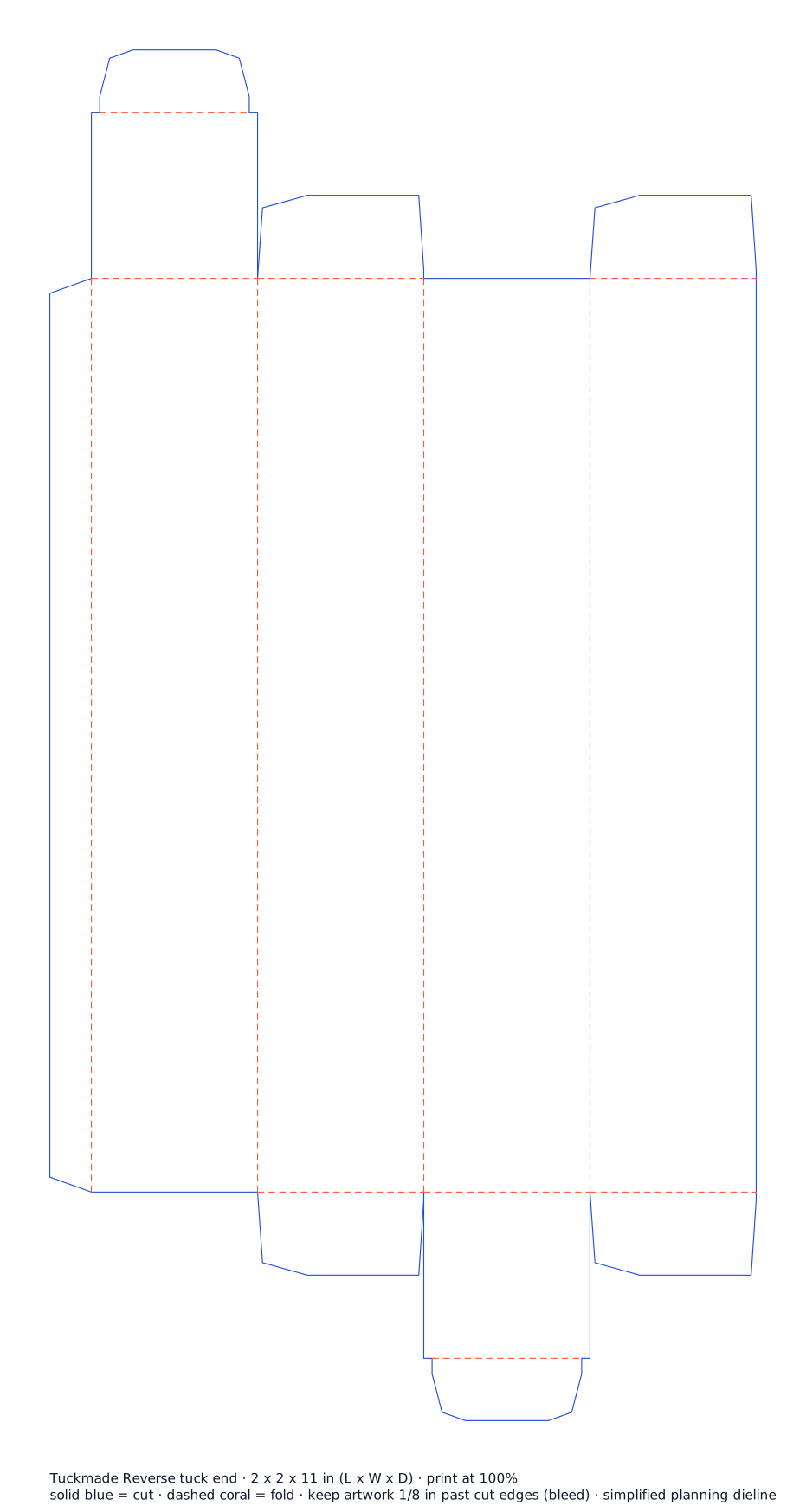
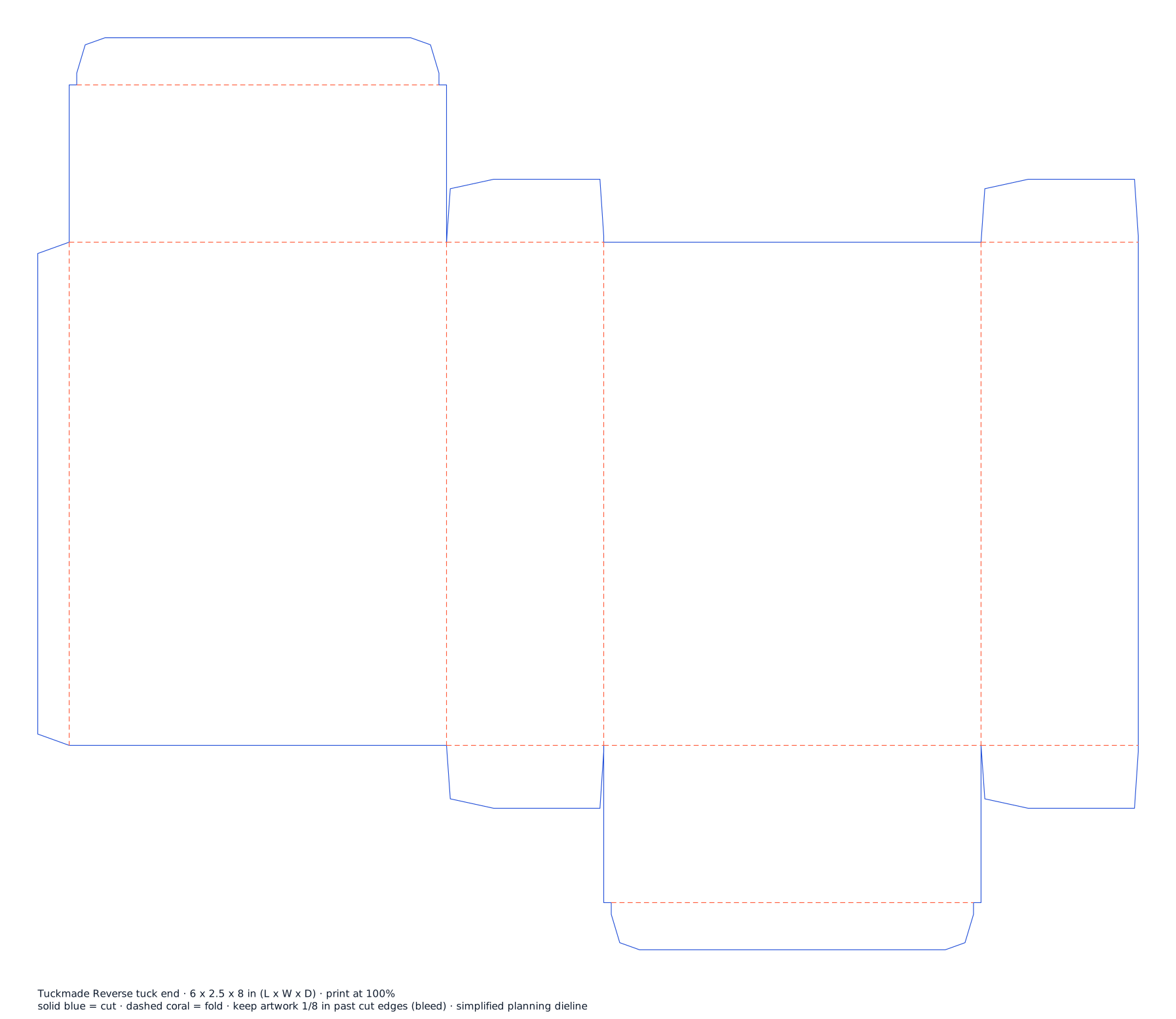
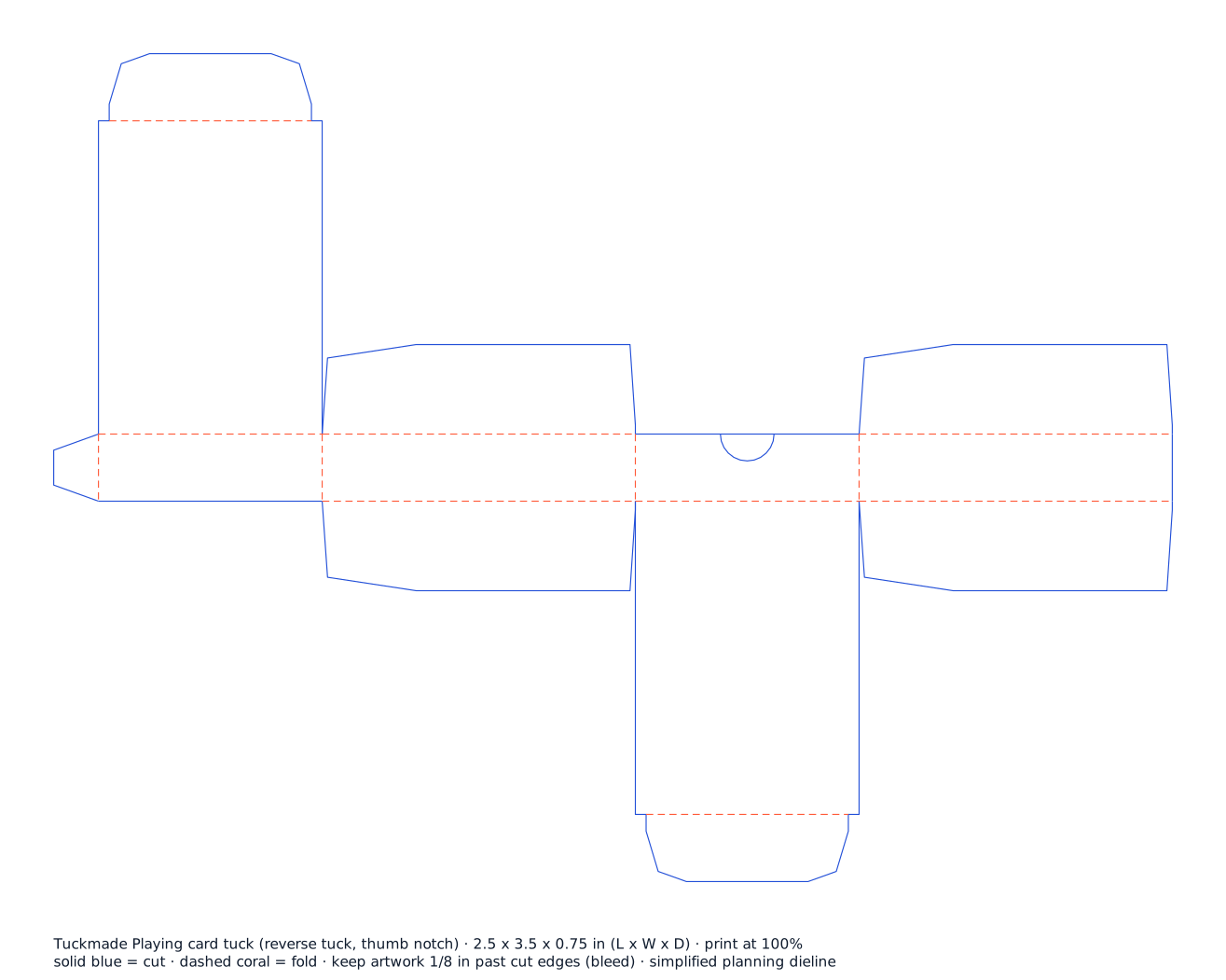
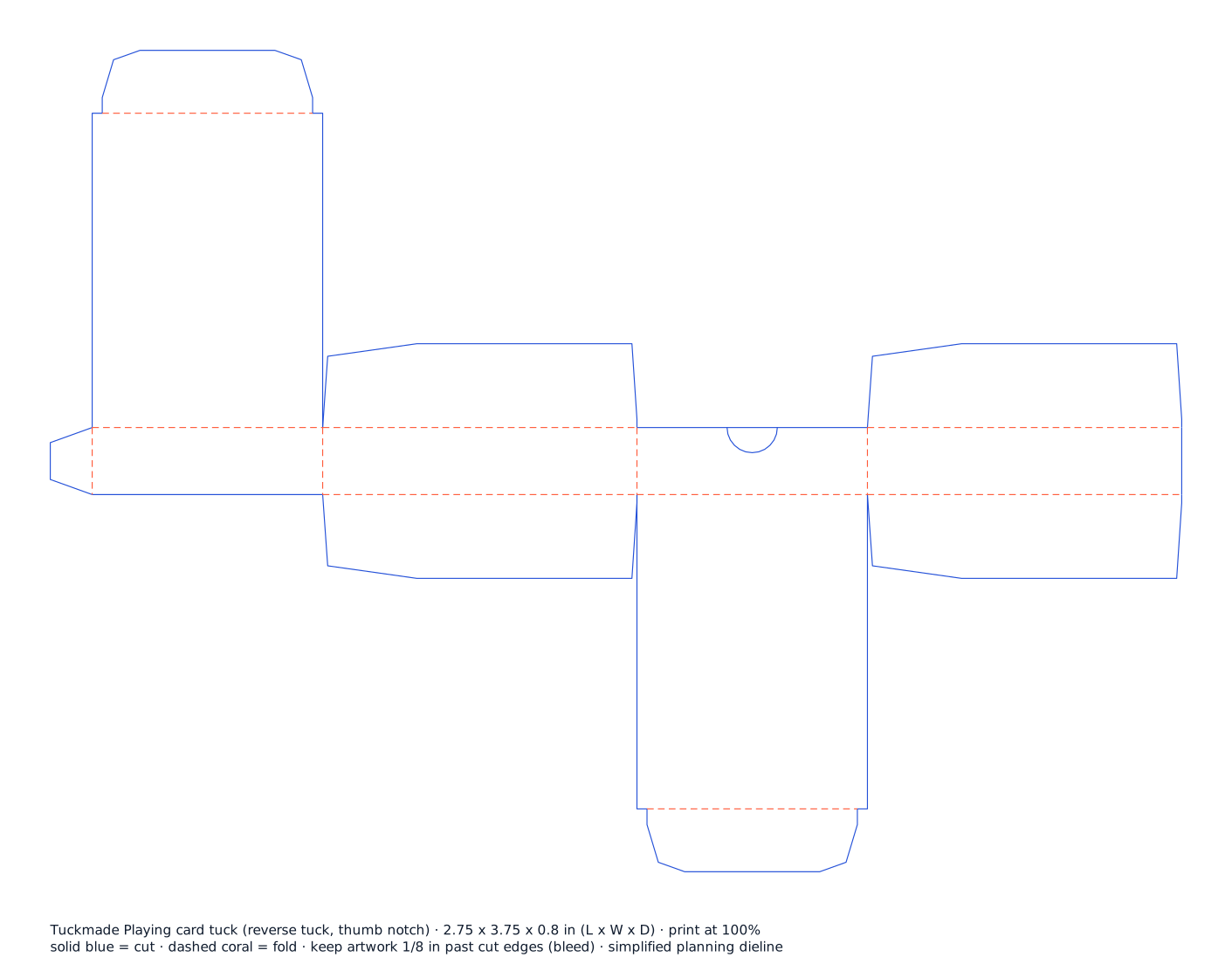
Free planning dielines in SVG and PDF for the most common tuck styles and sizes, drawn at true size. Print at 100% to check proportions, or place artwork on them in your design software.
- Solid blue: cut
- Dashed coral: fold
- Extend artwork 1/8 in past every cut edge (bleed)
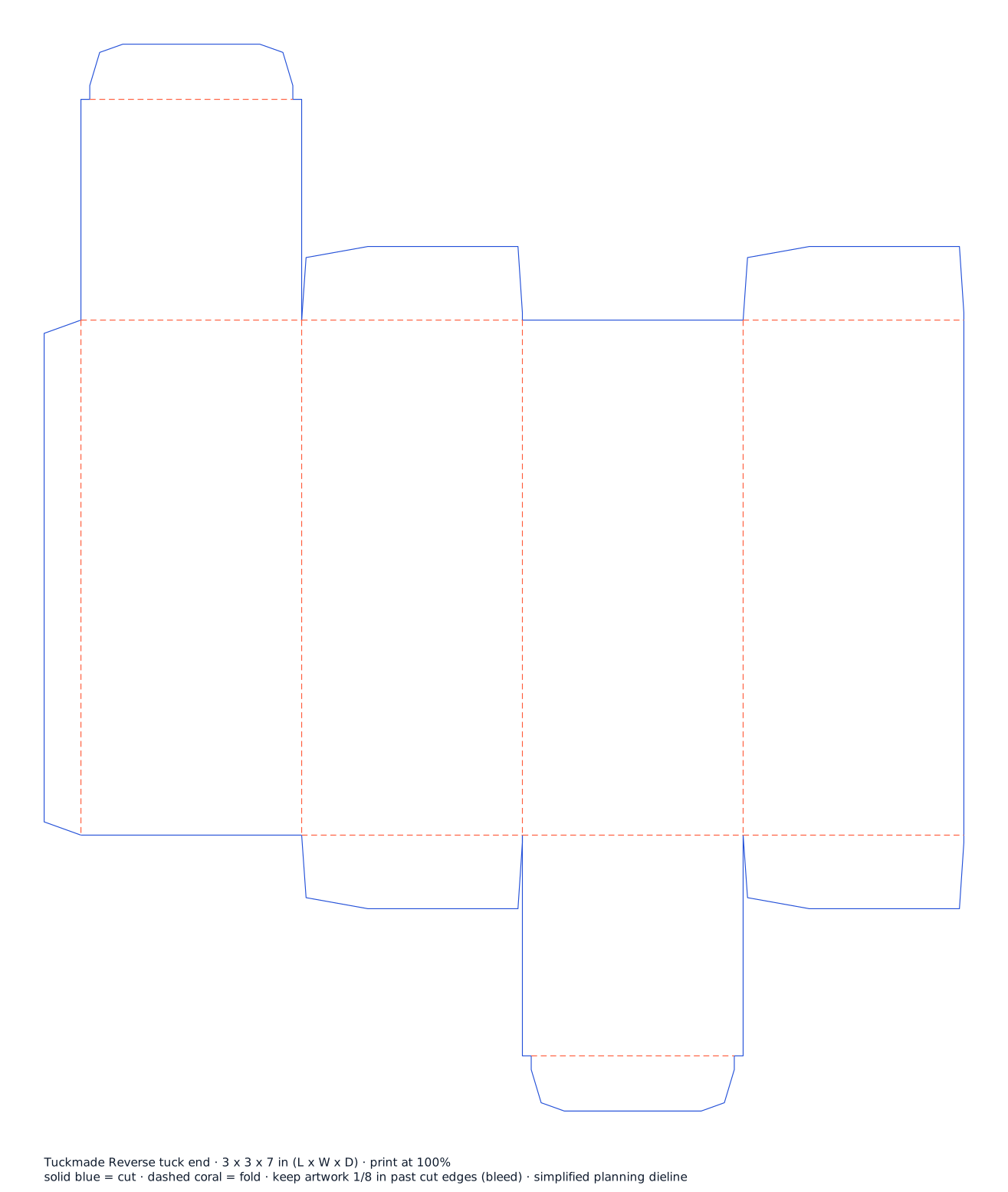
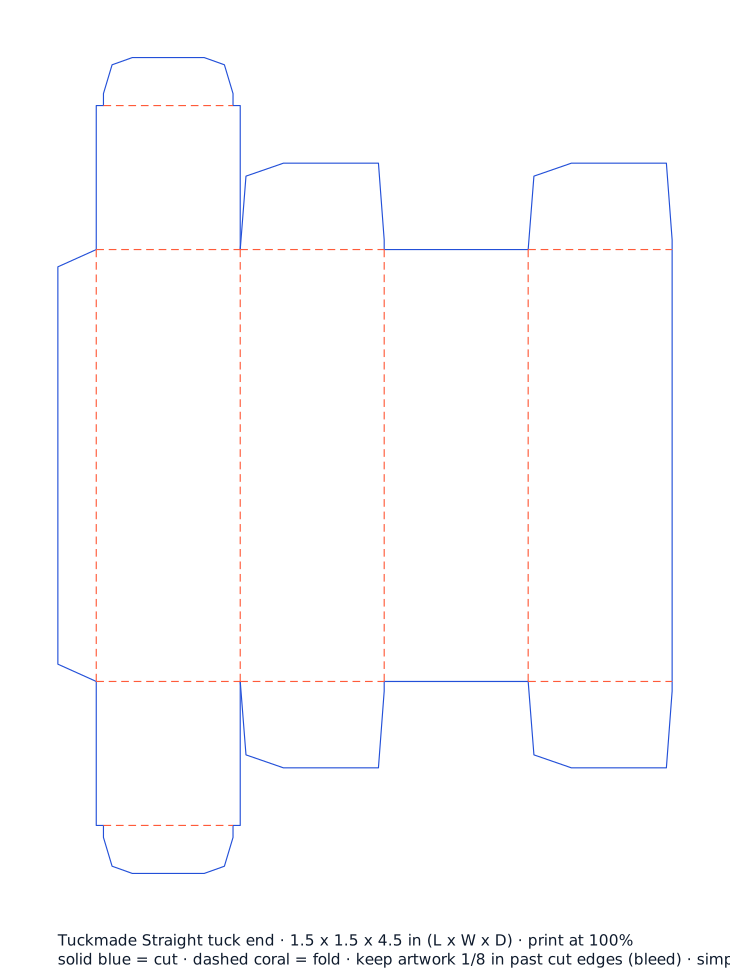
Straight Tuck End (STE)
Top and bottom tuck flaps both close from the front to the back, so the front panel is uninterrupted.
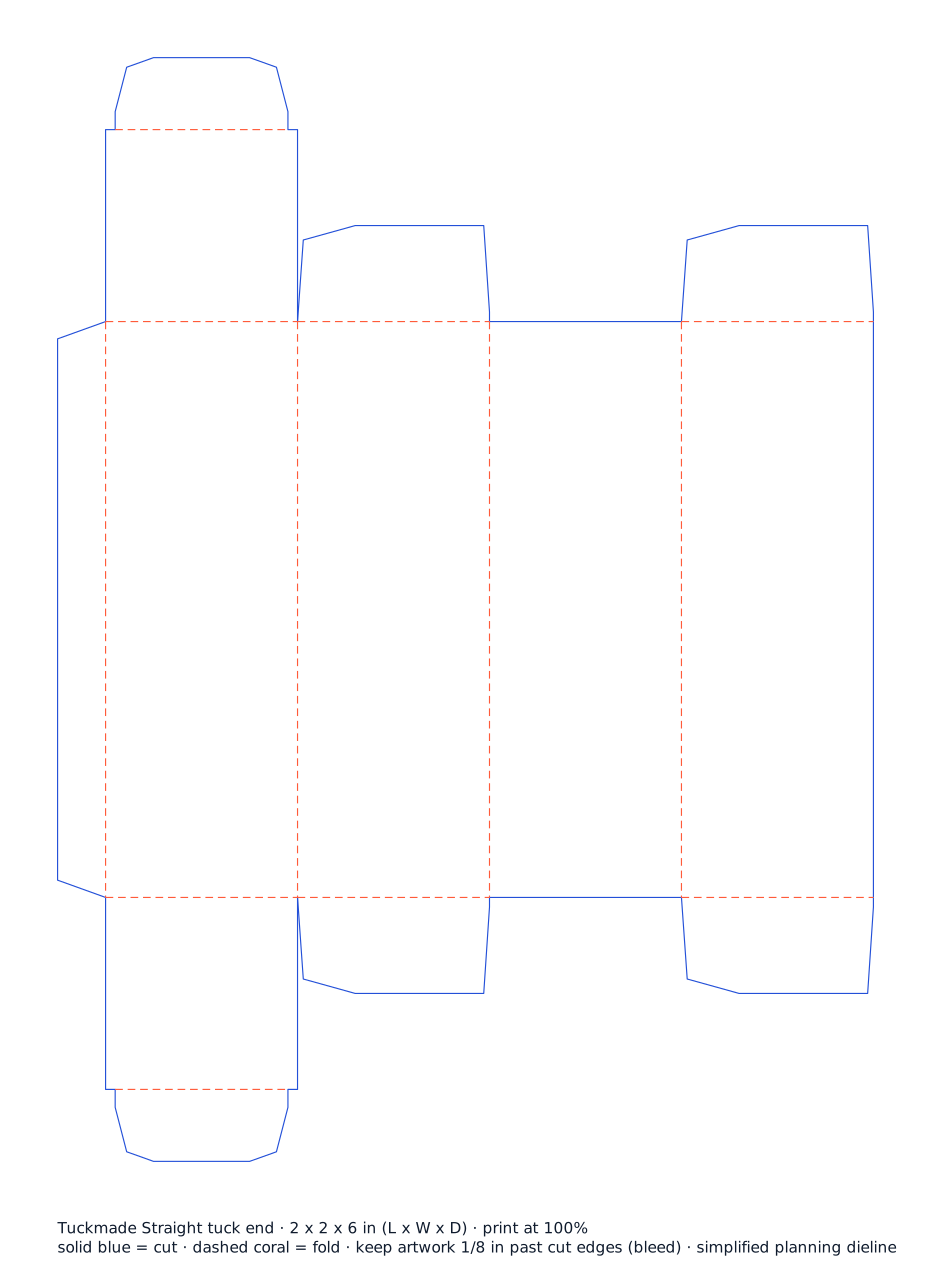
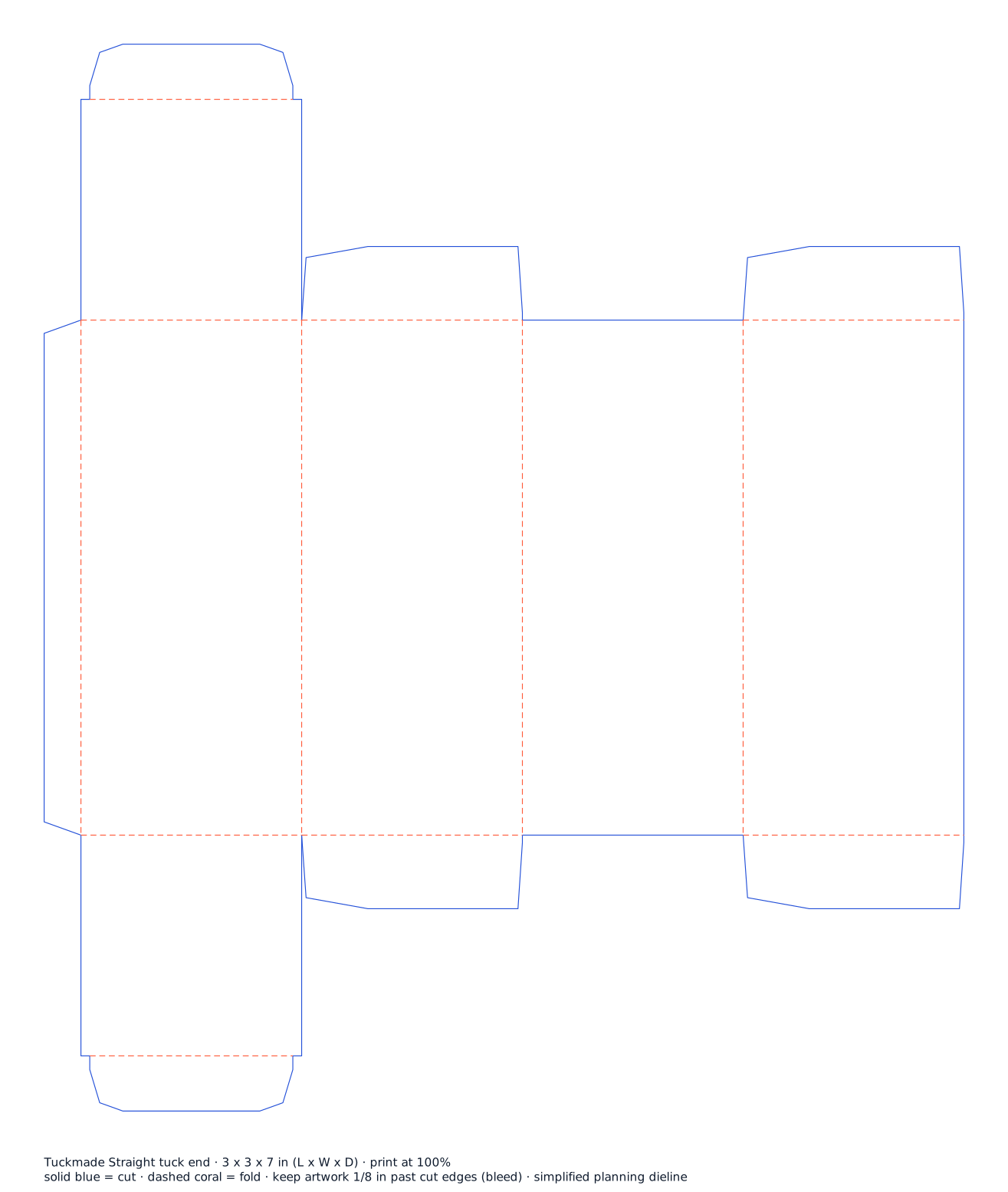
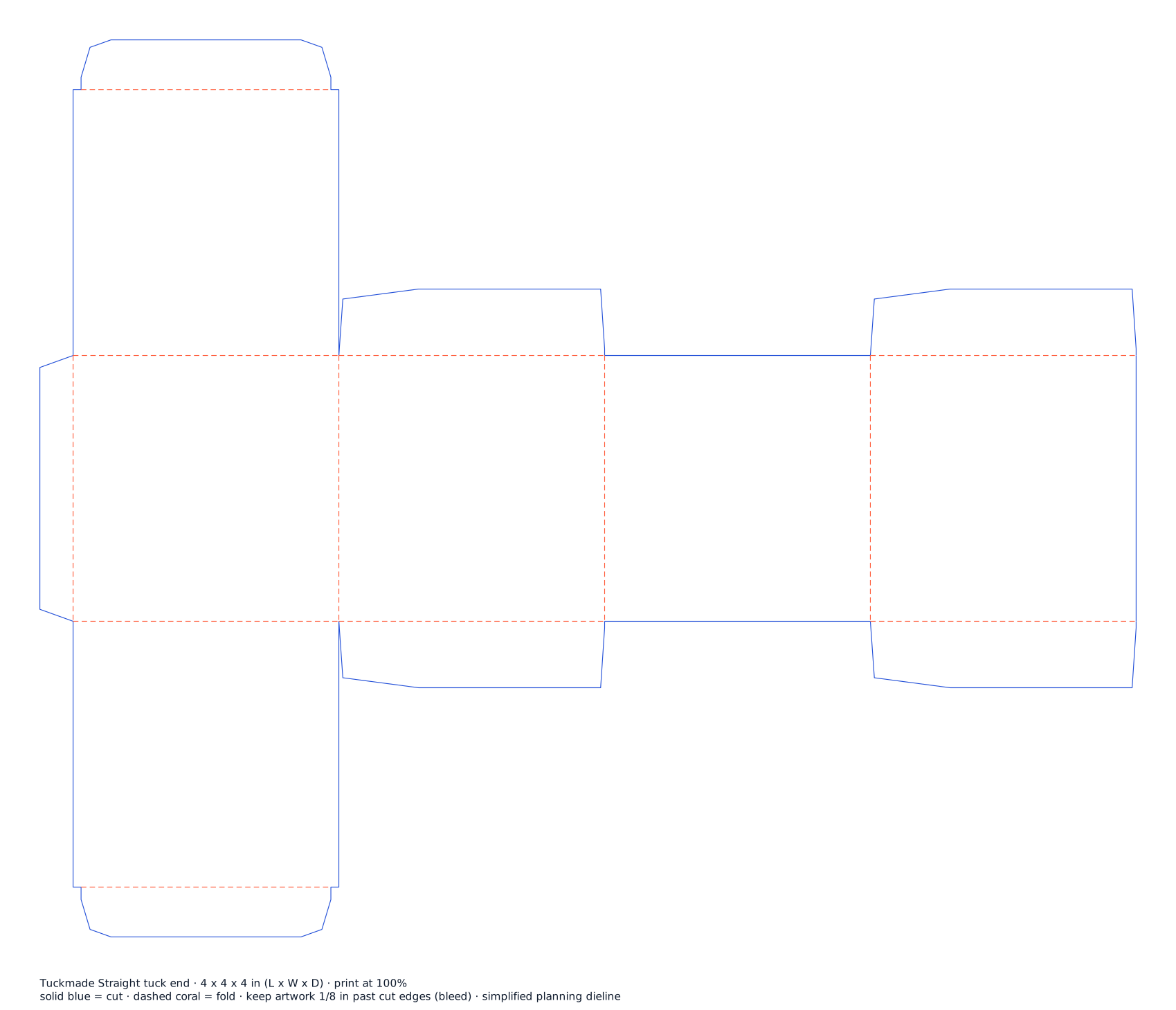
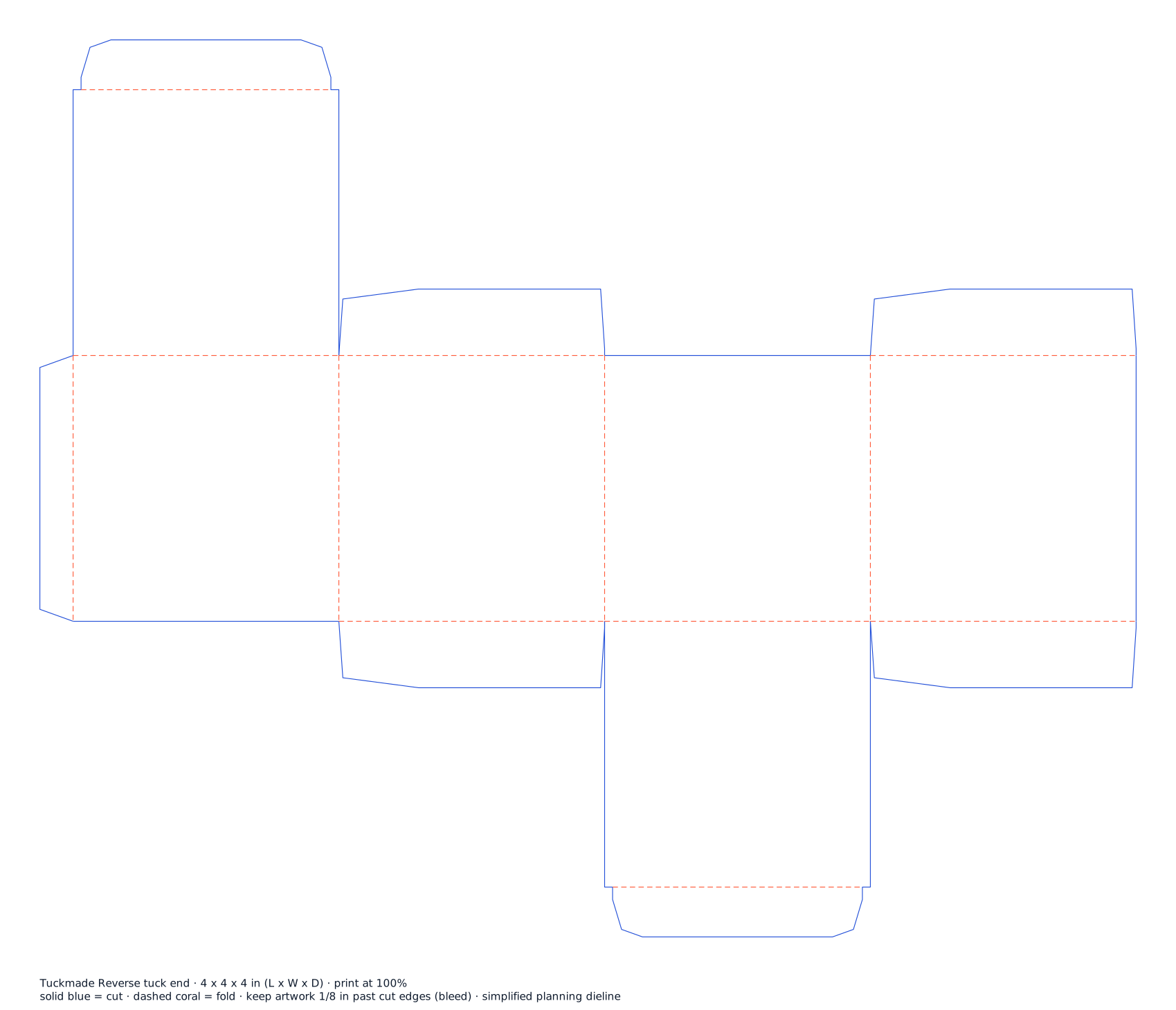
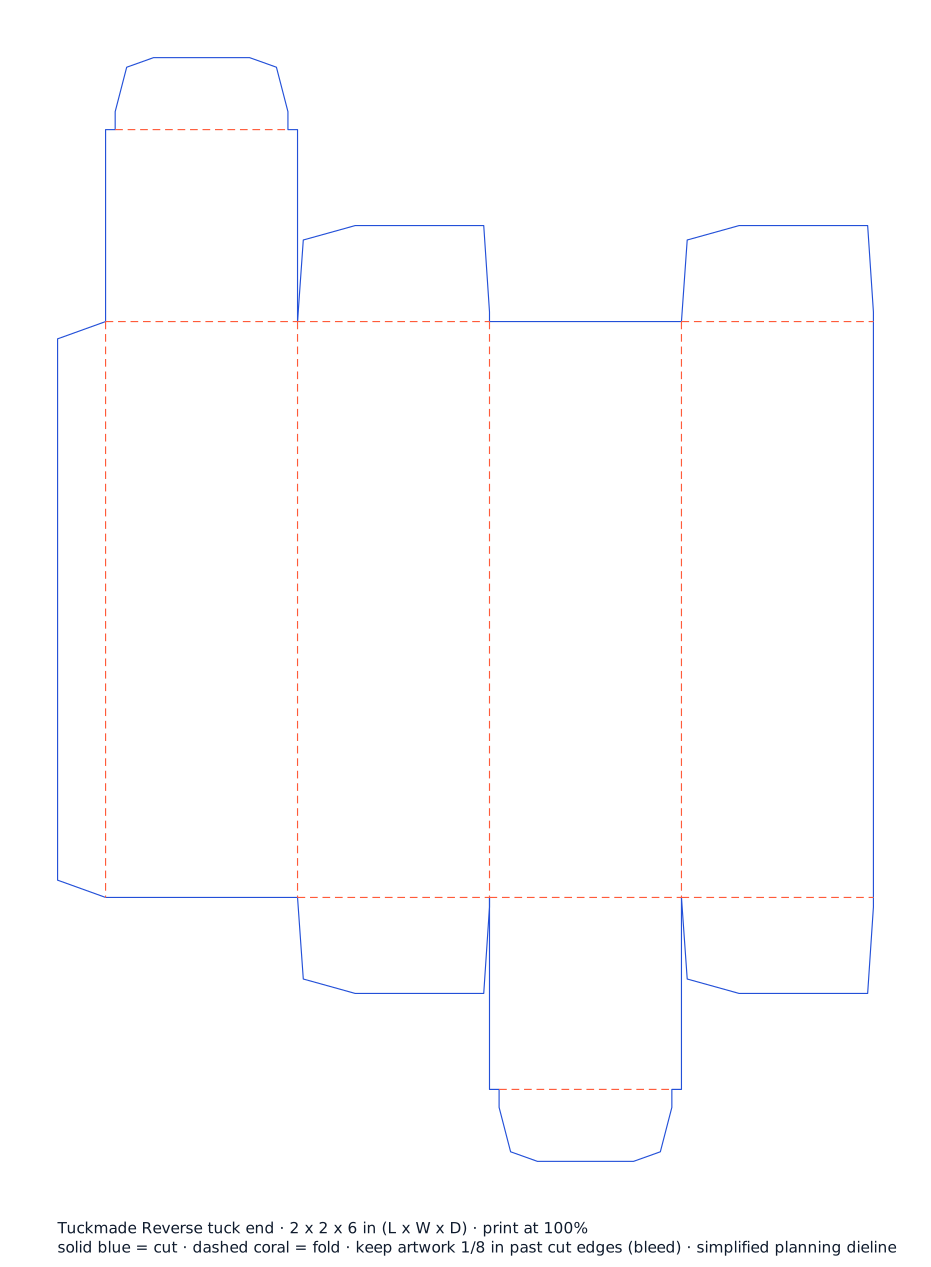
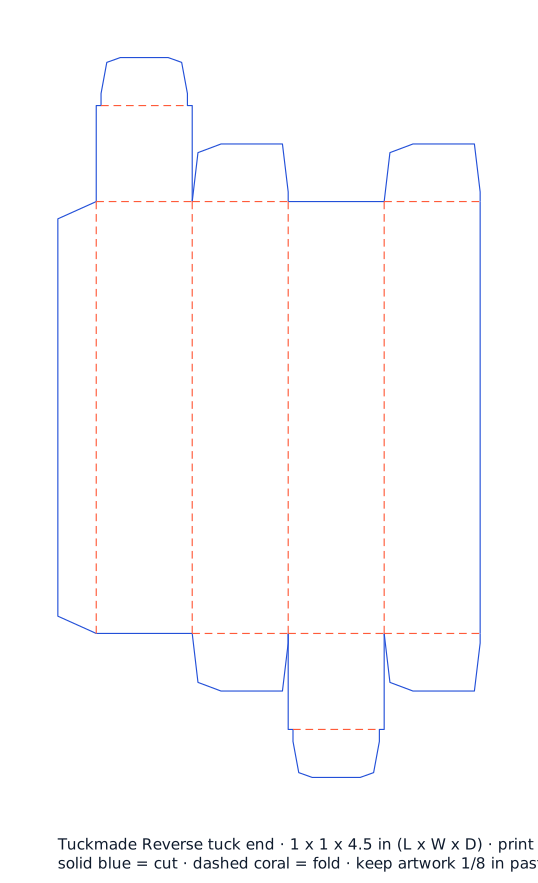
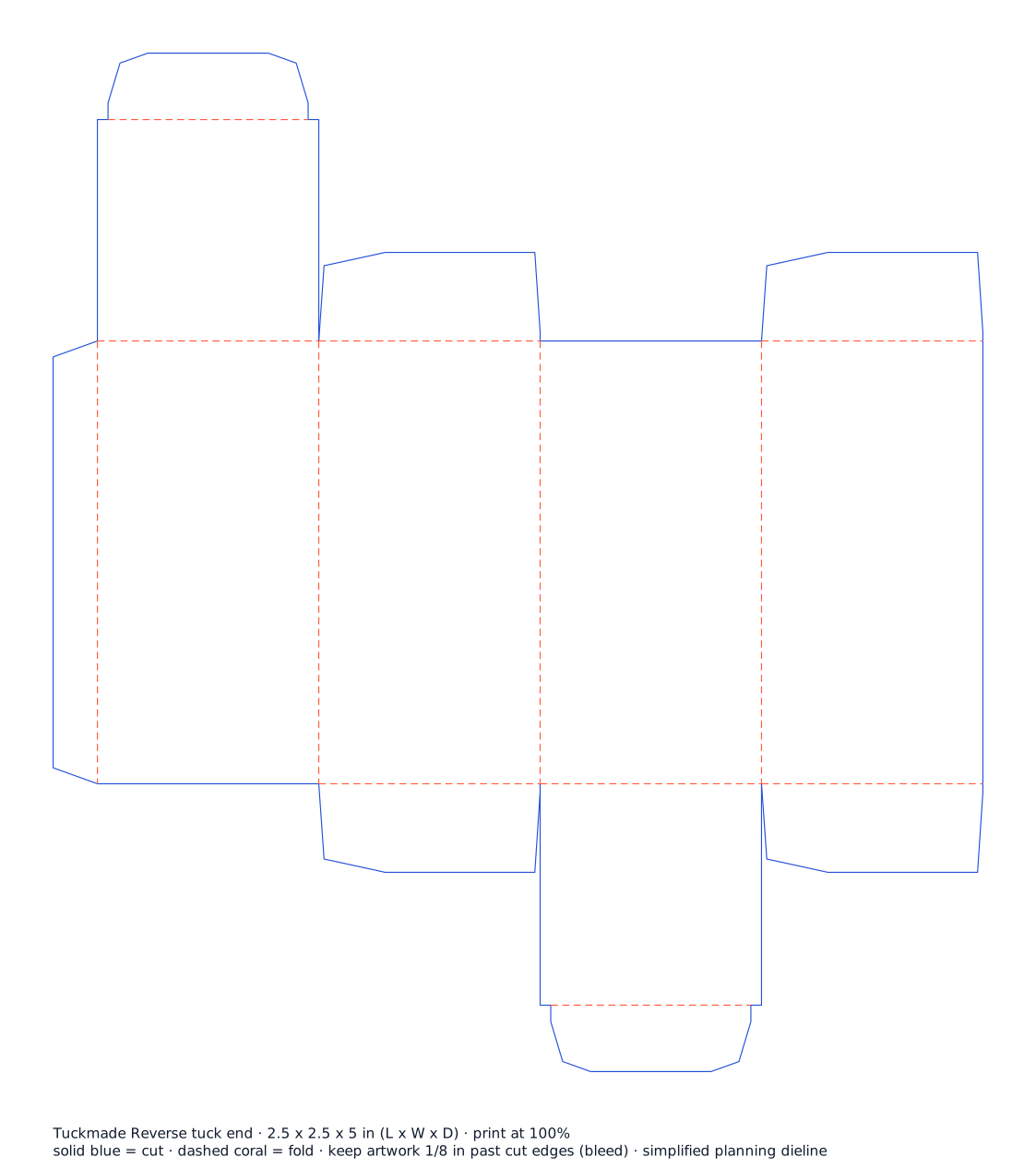
Reverse Tuck End (RTE)
Top flap tucks from back to front and bottom flap from front to back (opposite directions). The most common folding carton style.
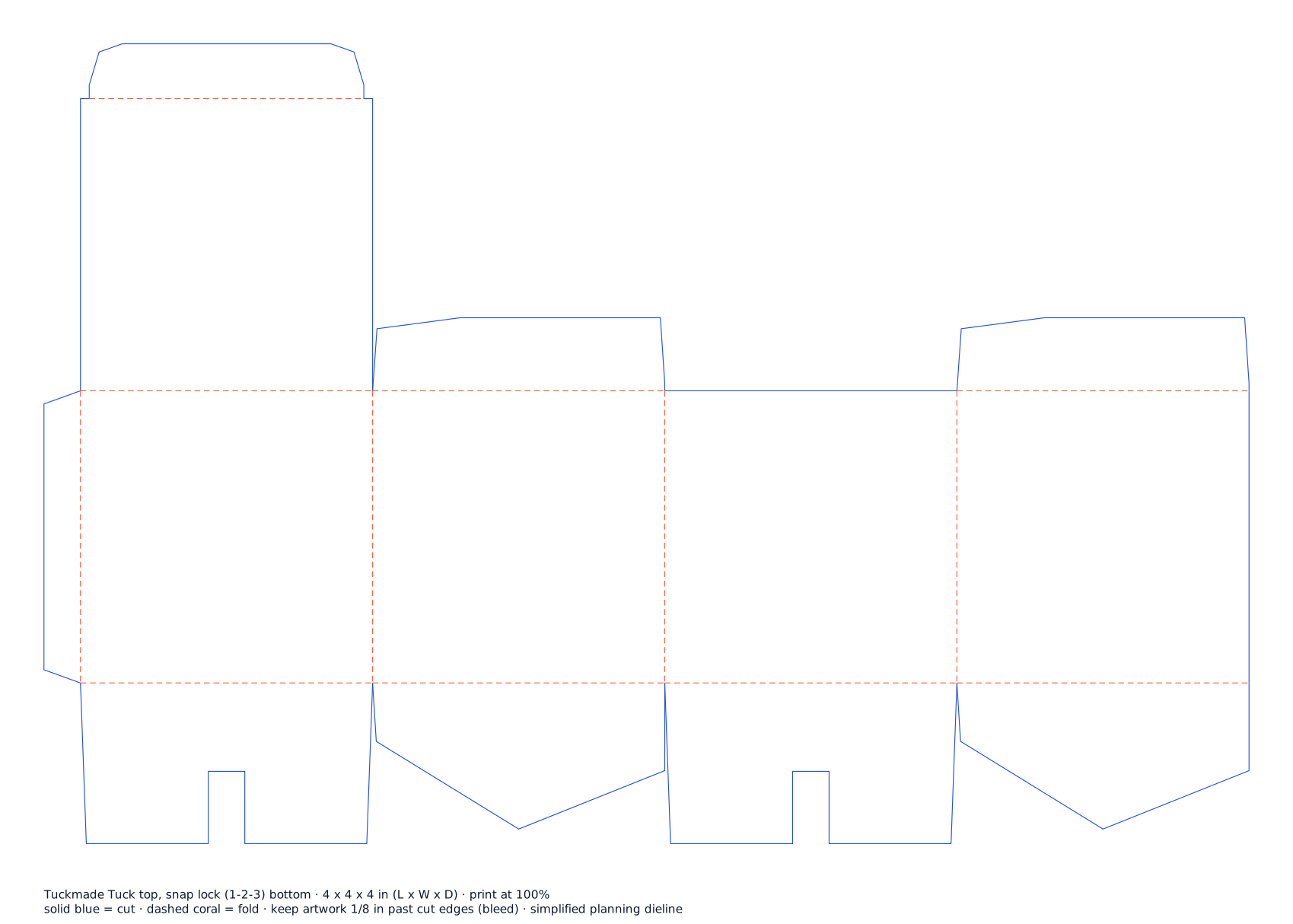
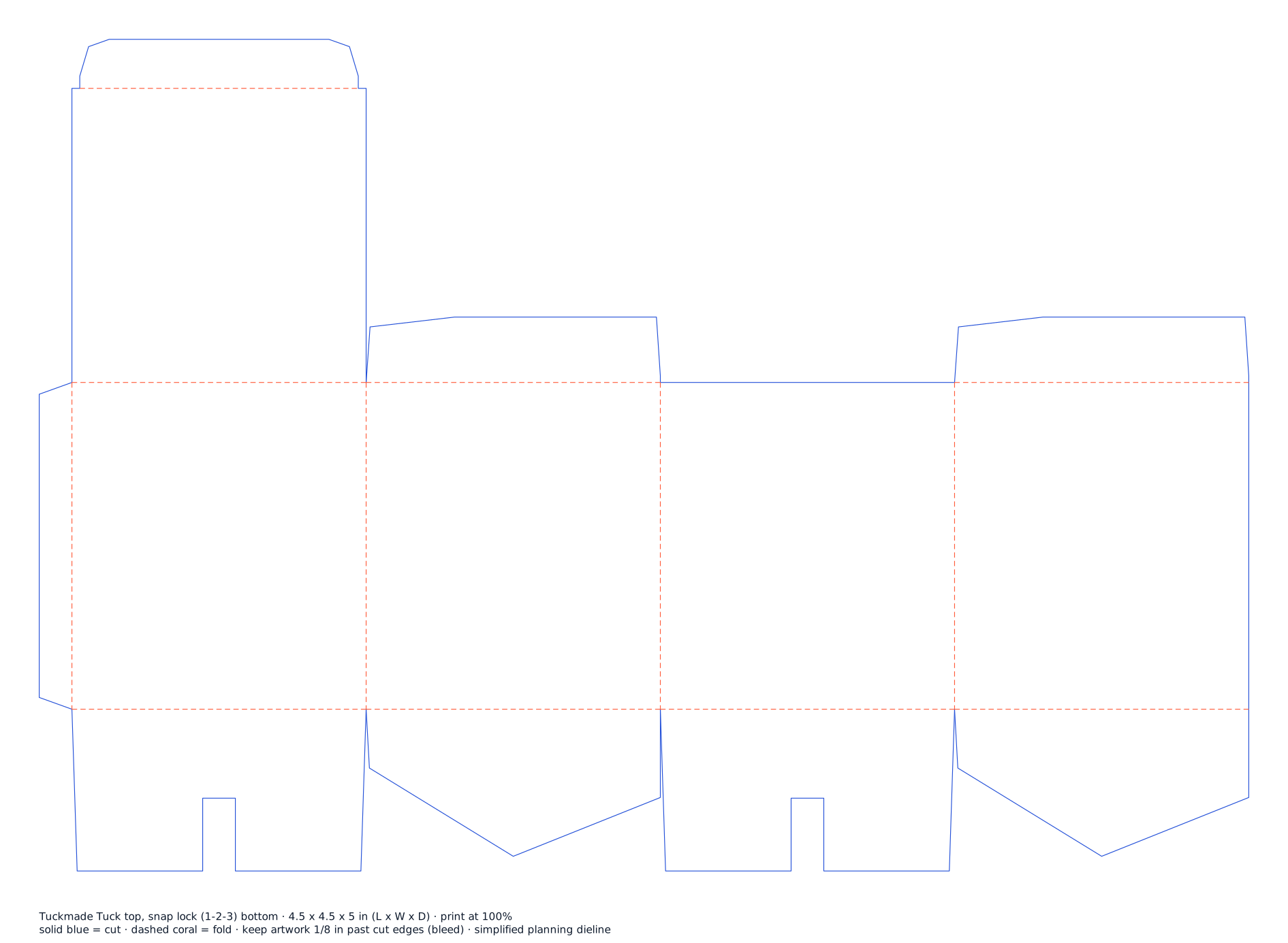
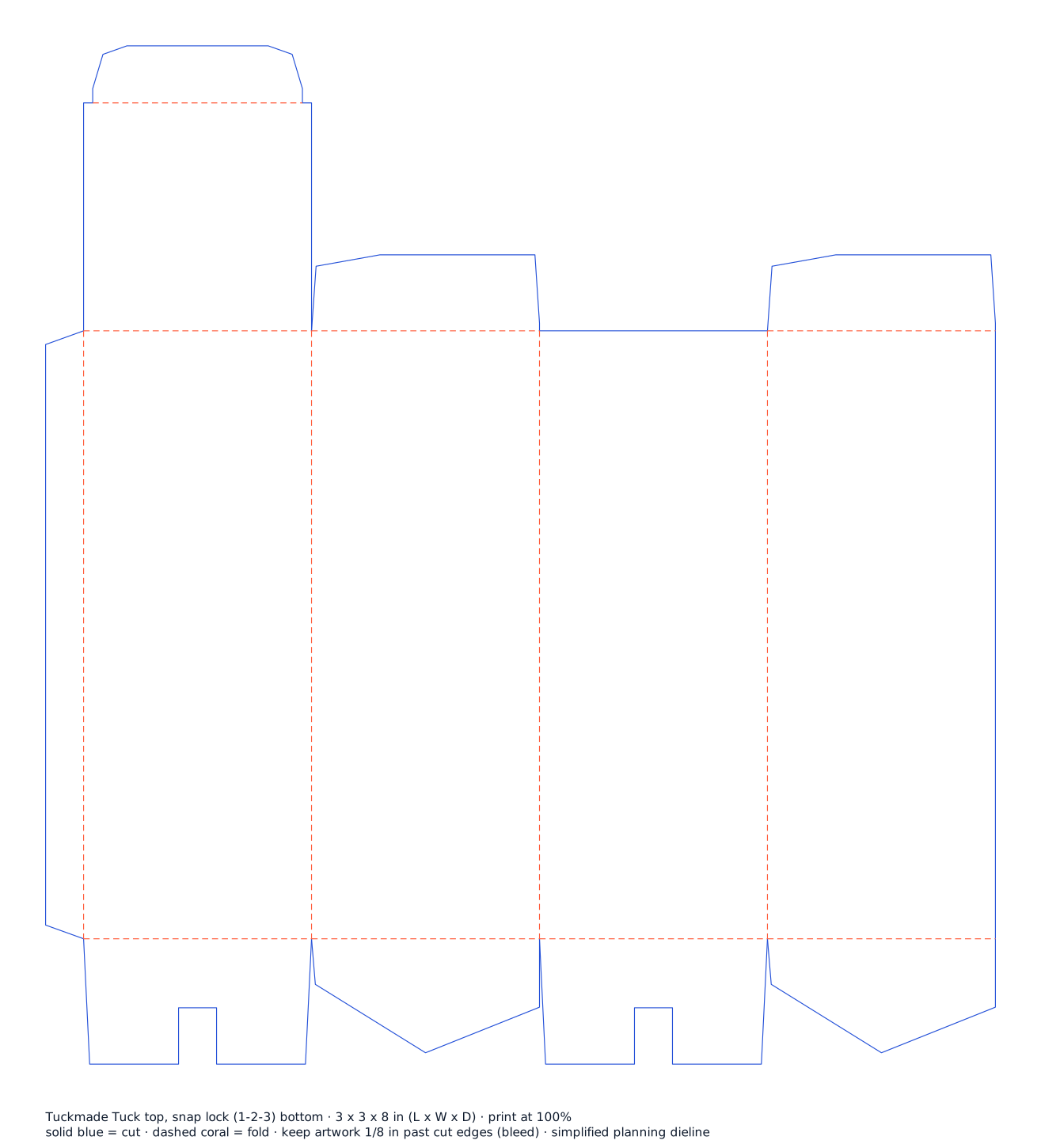
Tuck Top Snap Lock Bottom (1-2-3 bottom)
Tuck flap on top; four bottom flaps interlock by hand (no glue), stronger than a tuck bottom.
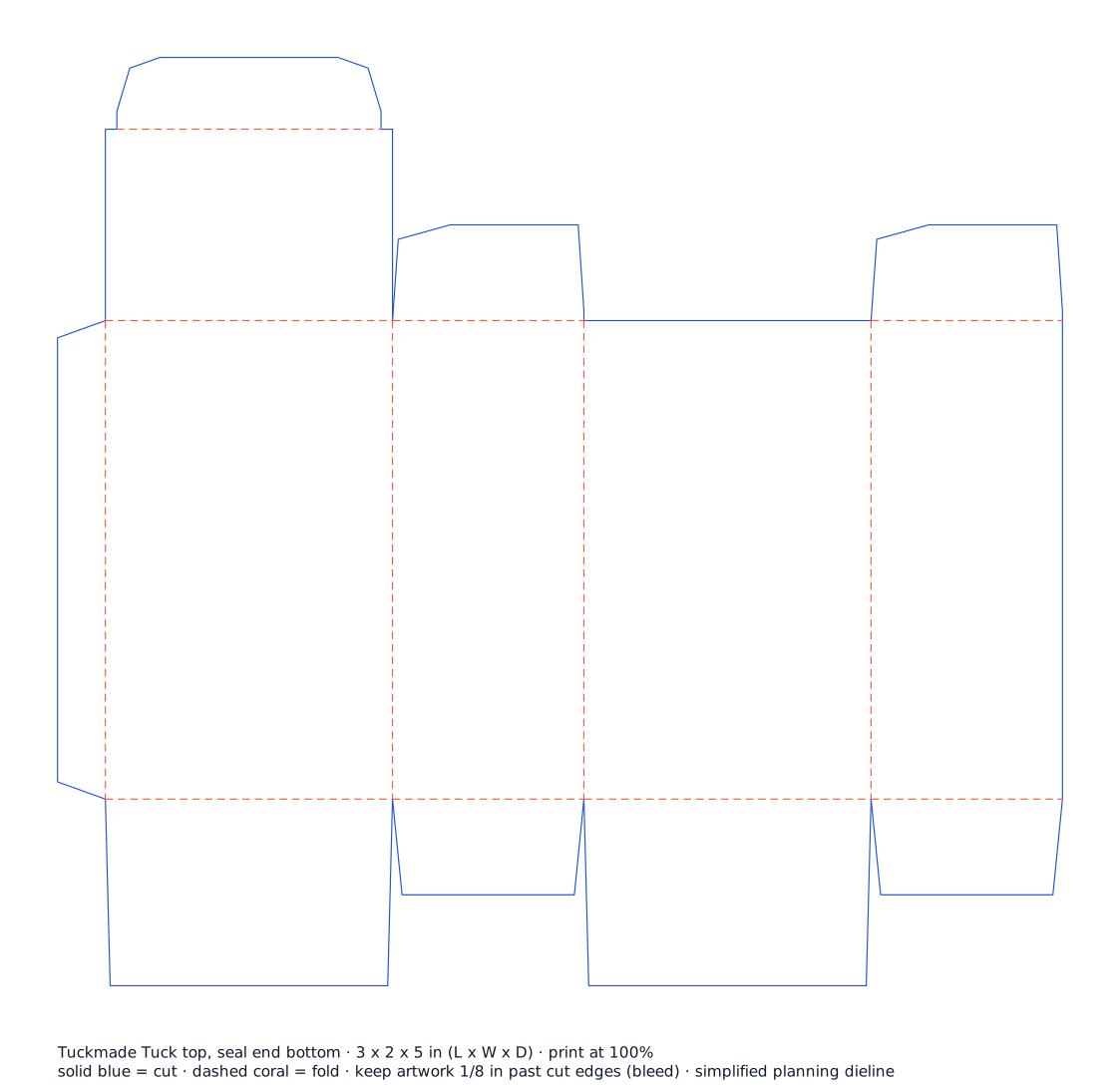
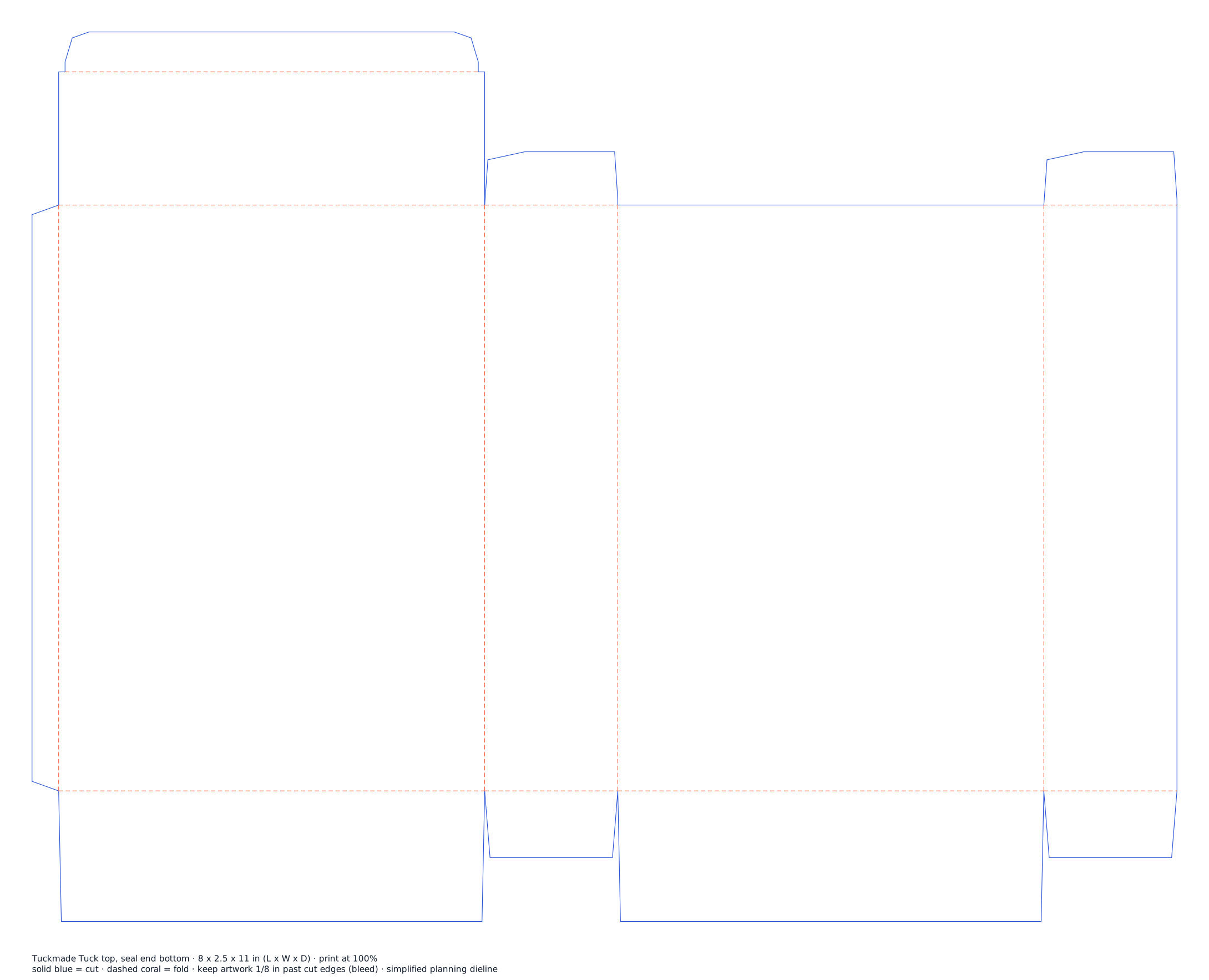
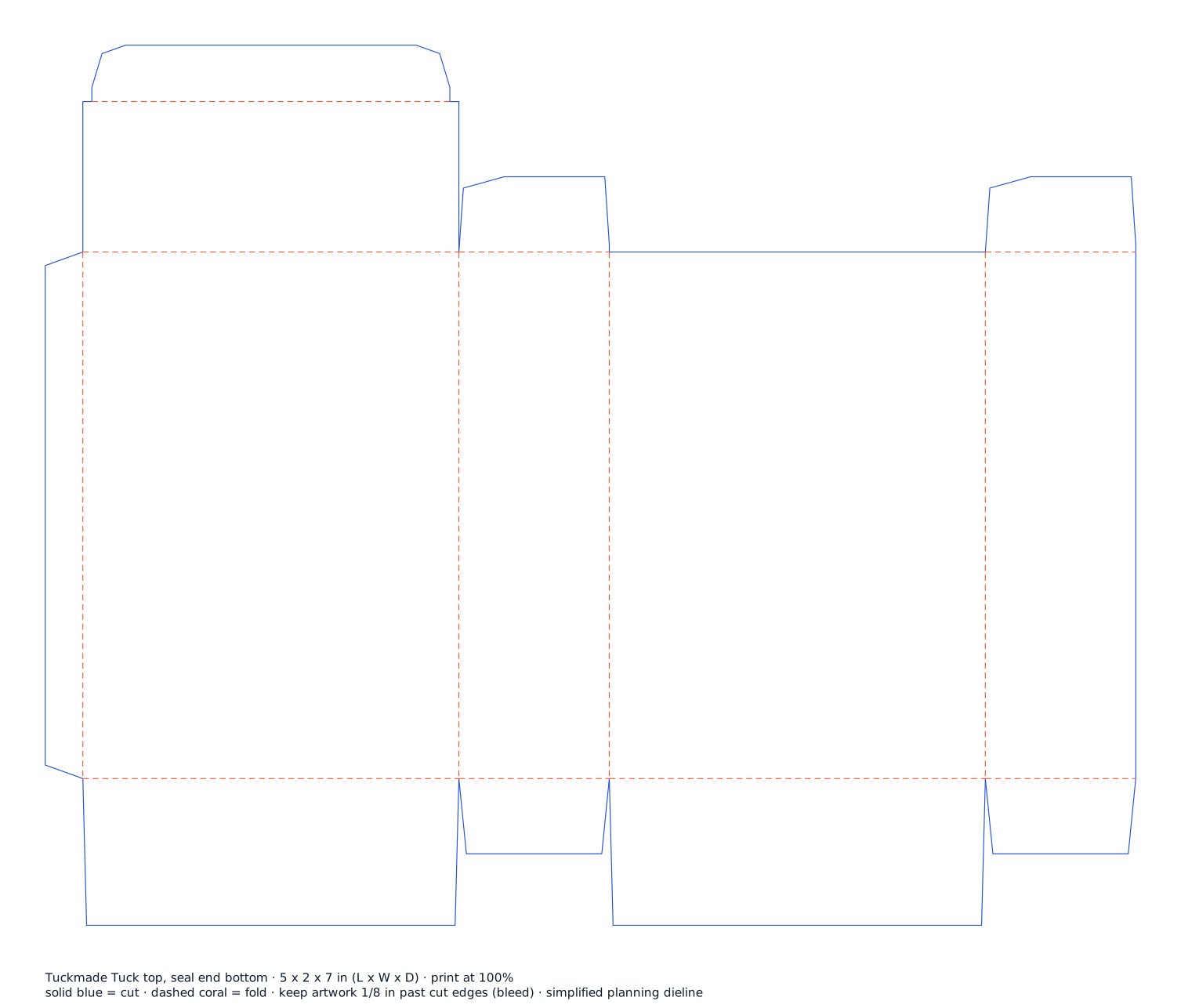
Tuck Top, Seal End Bottom
Hybrid: glued (seal end) bottom for strength or tamper evidence, tuck flap on top for re-opening.
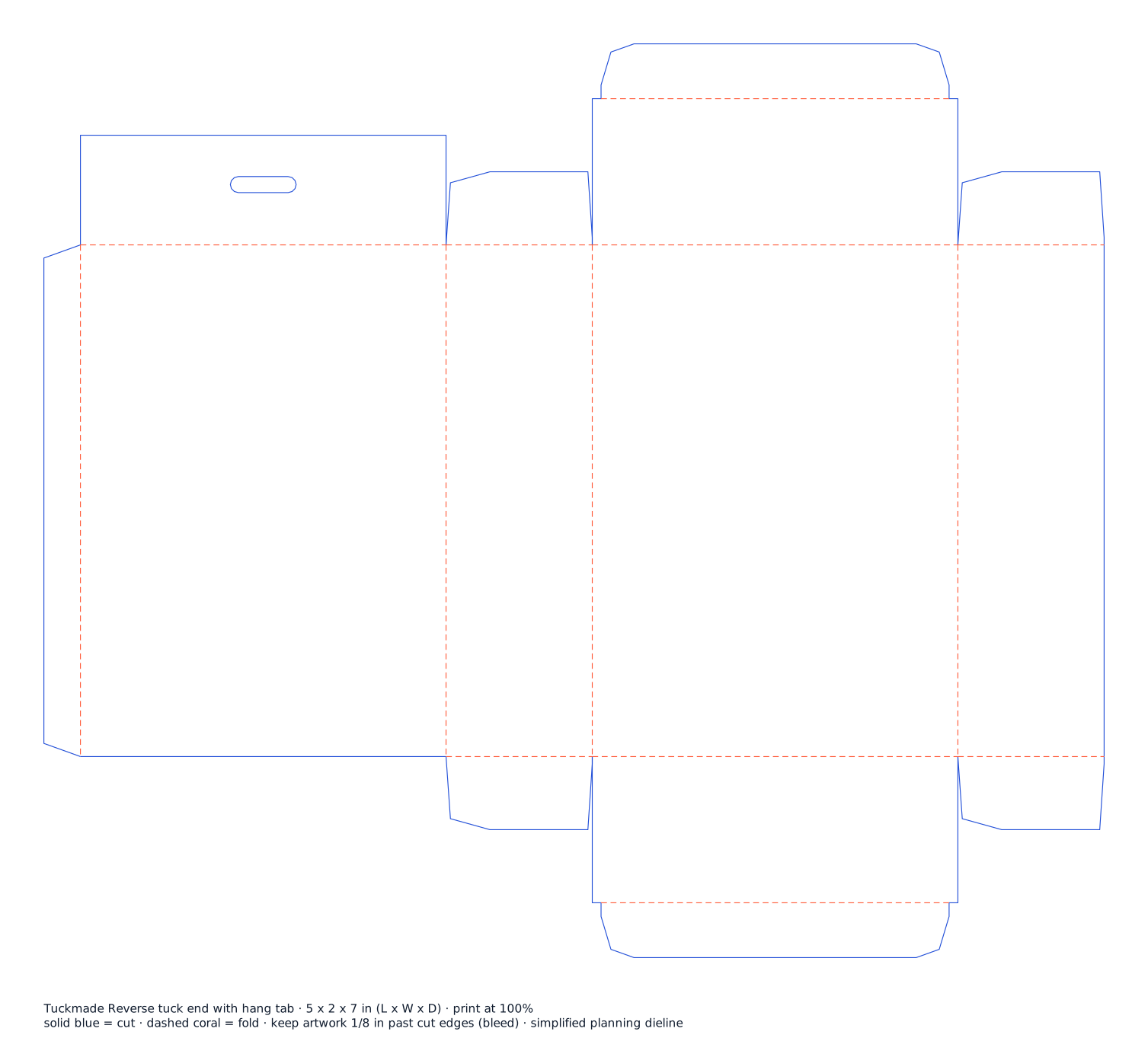
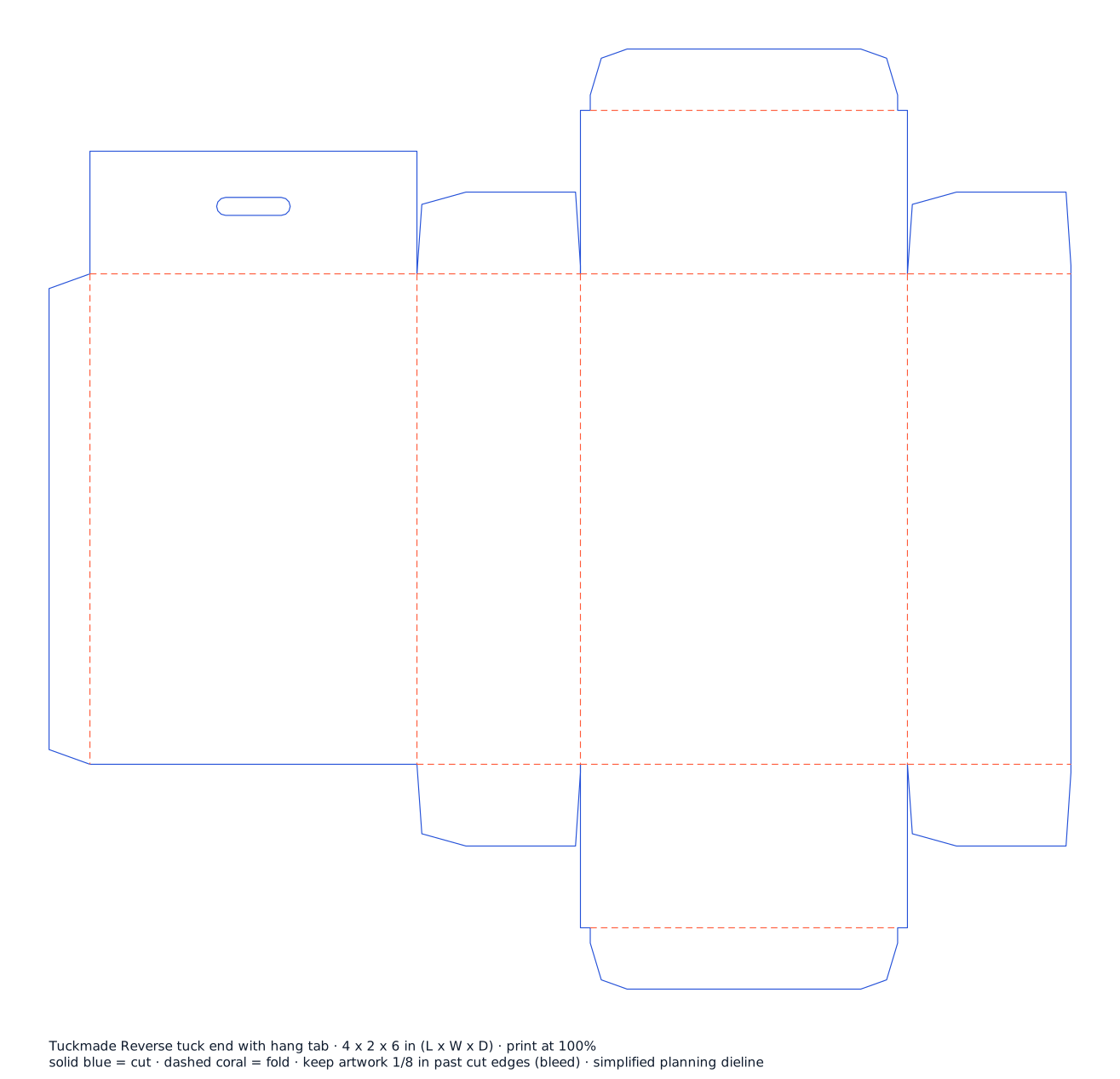
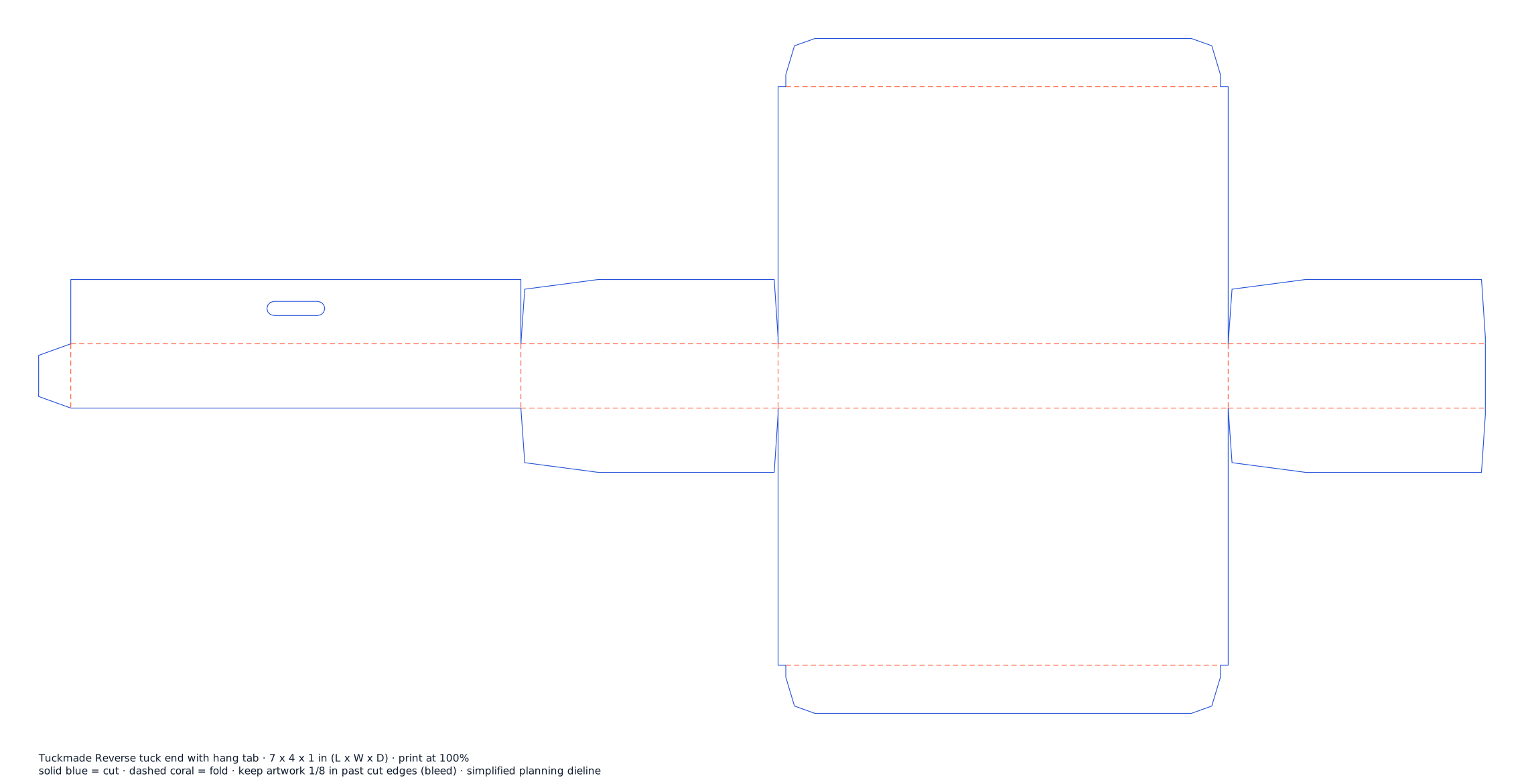
Tuck End with Hang Tab
Straight or reverse tuck carton with an extended back panel die-cut with a euro slot or round hole for peg hooks.
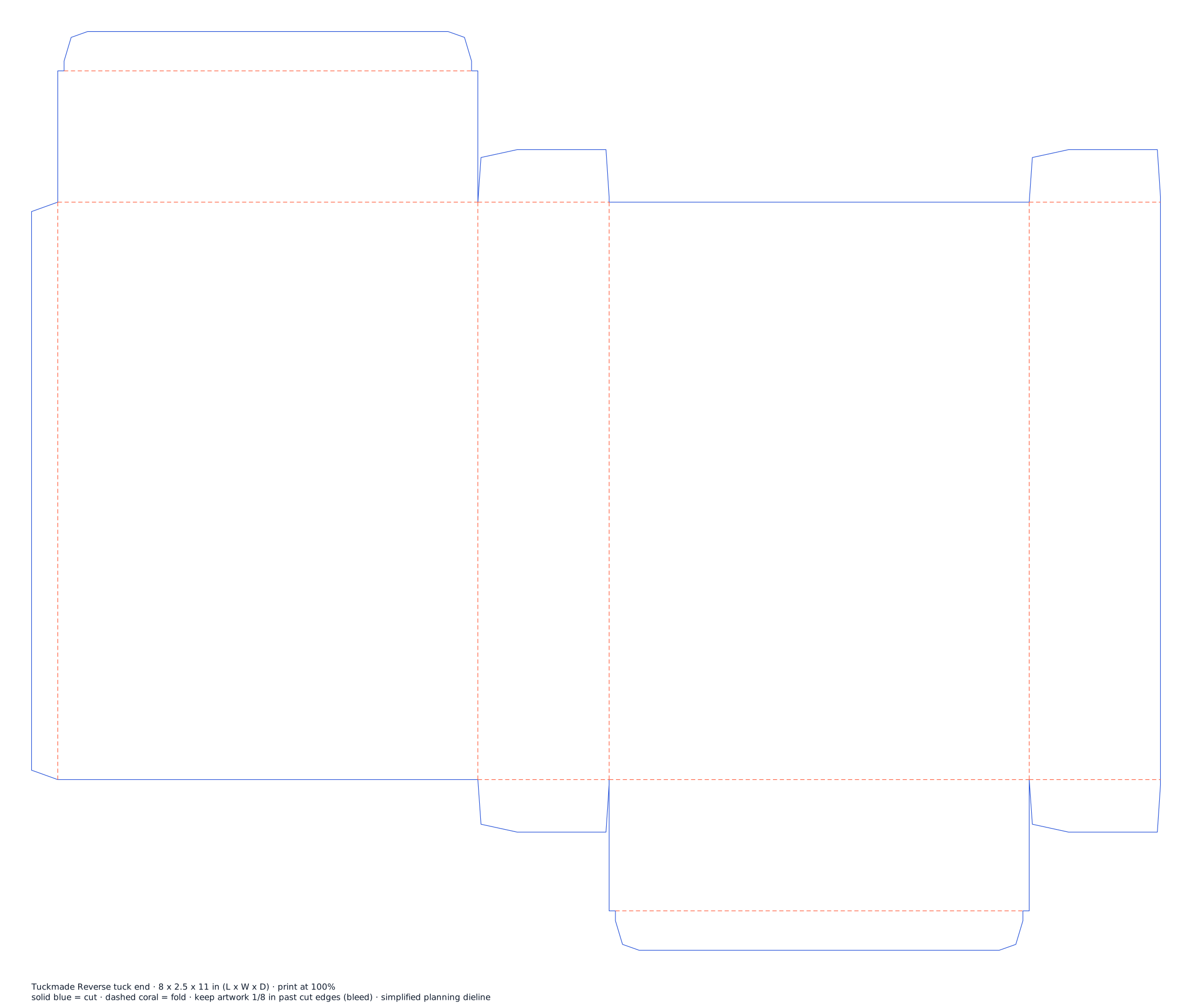
Tall Tuck Carton (cereal style)
Tall, slim reverse tuck or tuck-top/seal-end carton with a large front billboard.
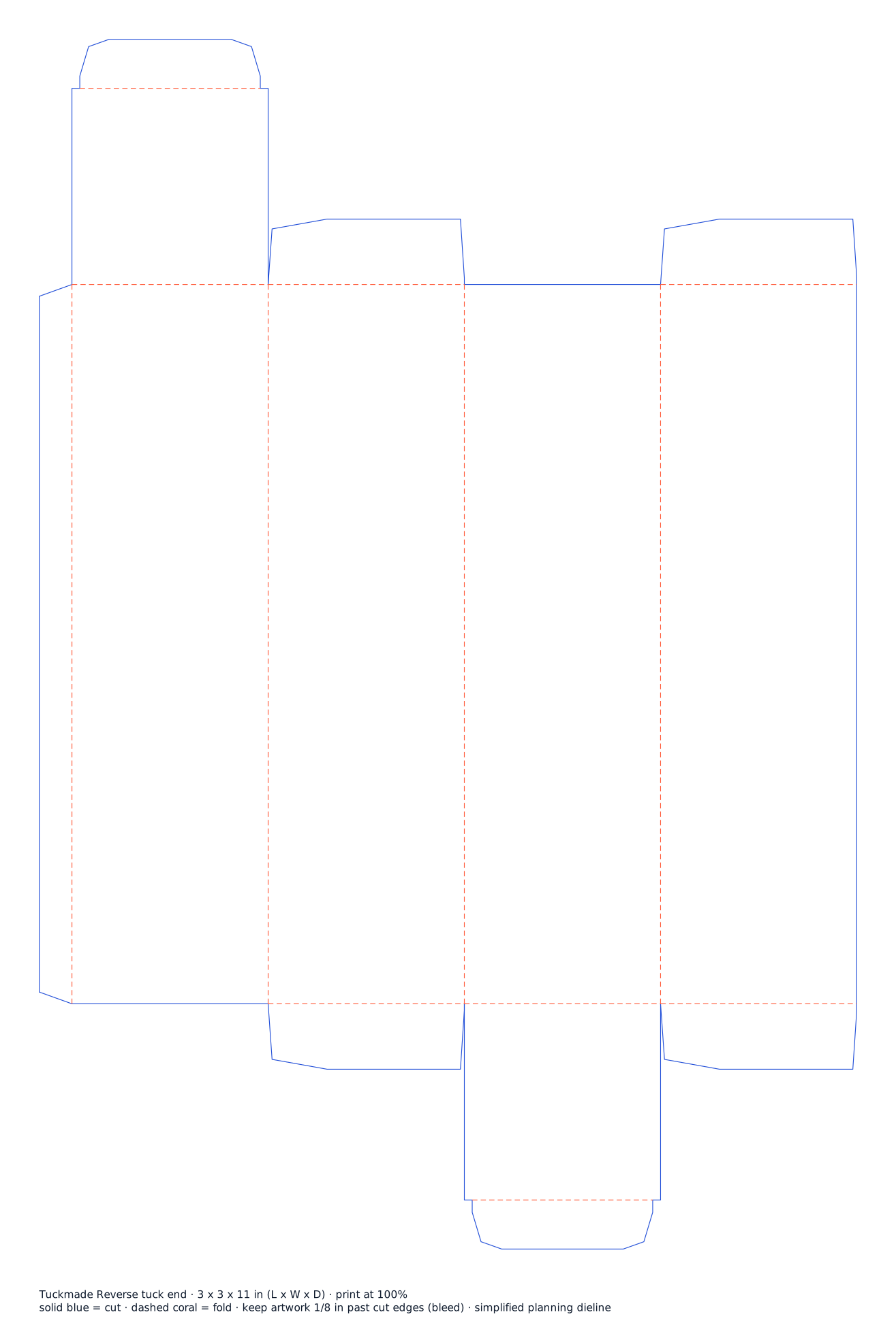
Playing Card Tuck Box
Small reverse tuck carton sized to a deck, usually with a thumb notch and dust flaps.
Kraft Tuck Box
Any tuck style on natural brown kraft paperboard; prints best with bold colours and white ink.
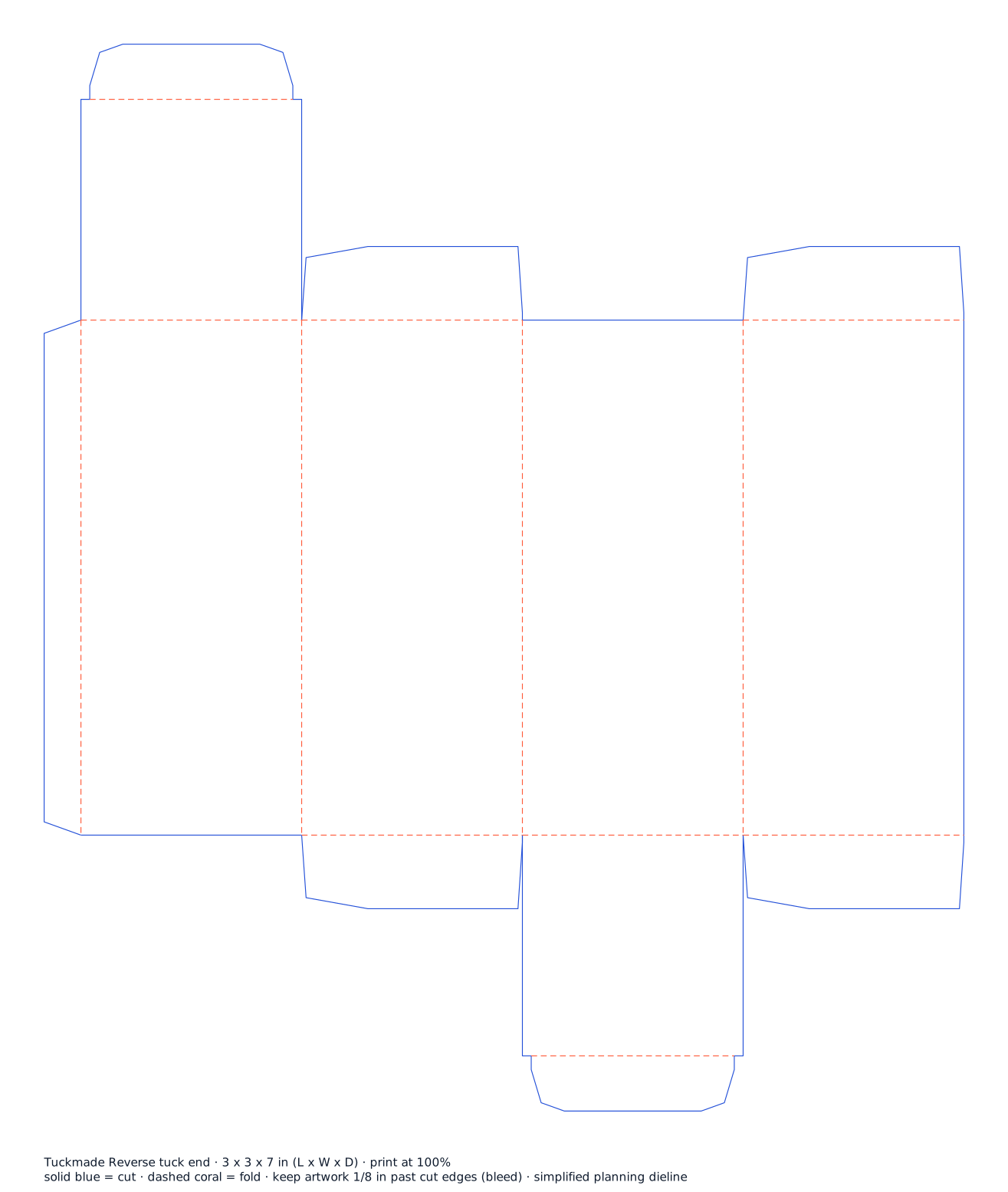
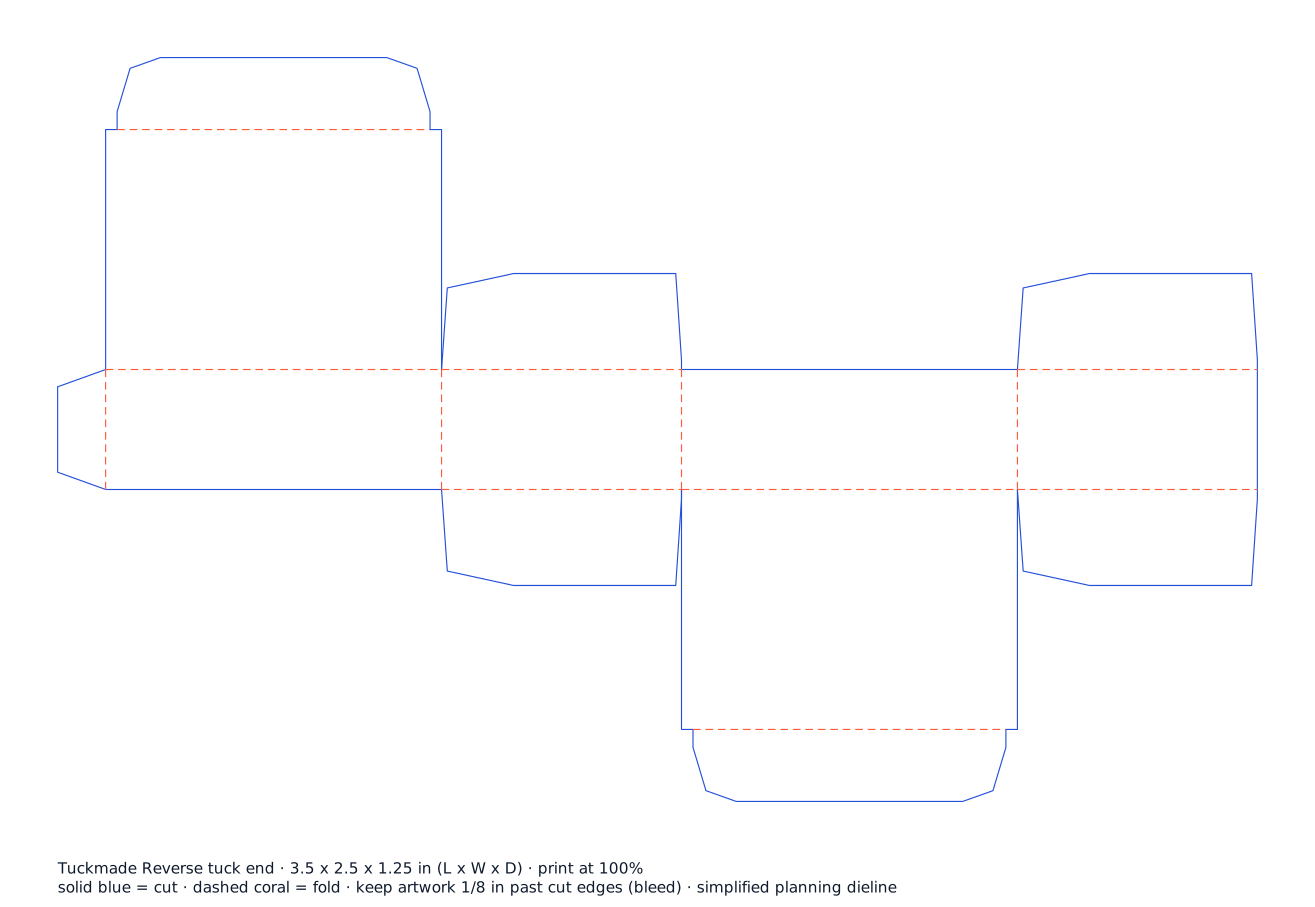
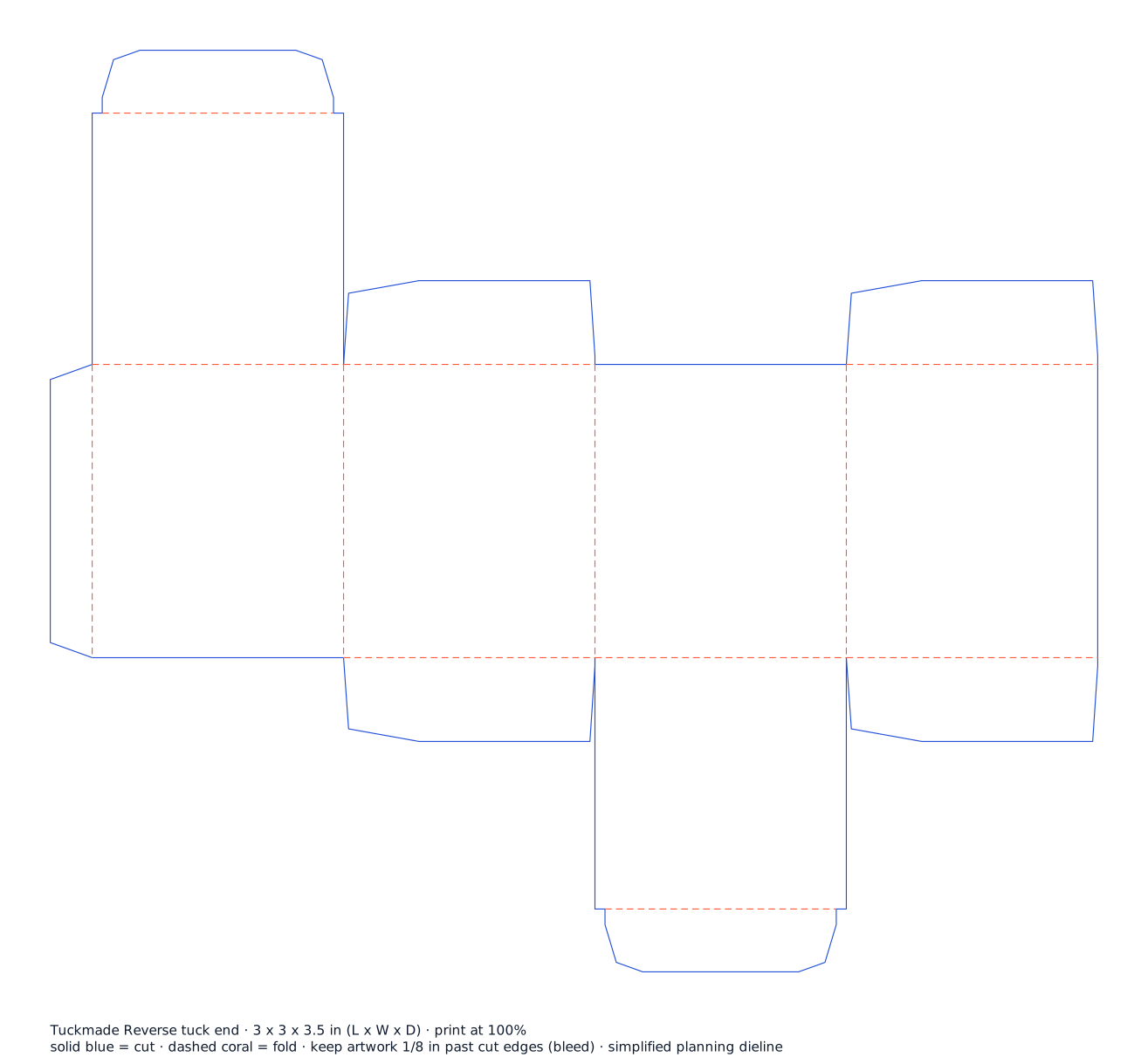
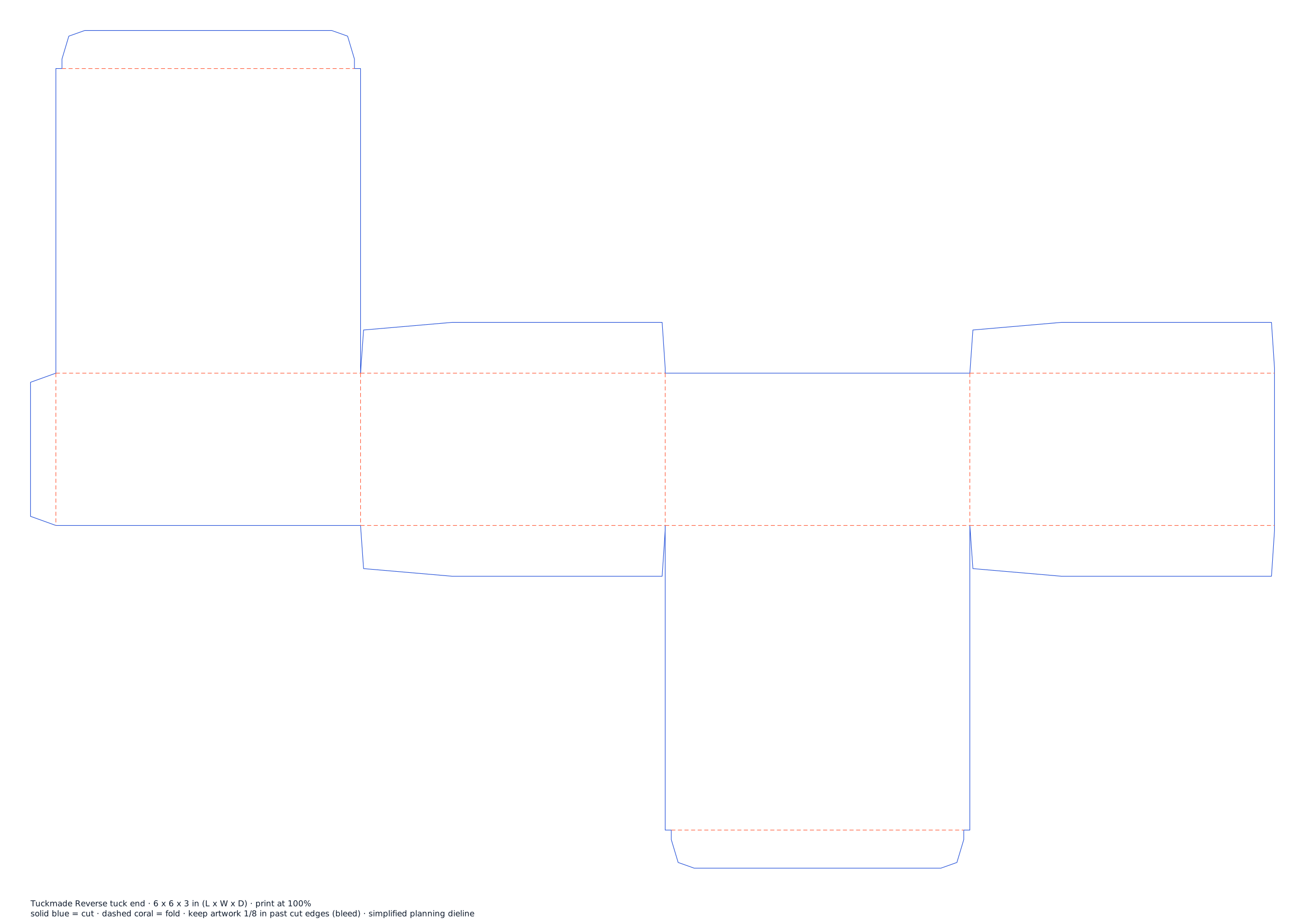
These are simplified dielines for planning: flap shapes and clearances are generic. The production dieline for your exact size and board comes with your digital proof. Styles not listed (auto bottom, French reverse tuck, inserts, mailers, hexagon and others) get their dieline with your quote.
Placing artwork
- Keep text and logos at least 1/8 in inside fold and cut lines (safe zone).
- Extend background colour 1/8 in past cut lines (bleed).
- The tuck flap and dust flaps are hidden when closed: no important artwork there.
- Images at 300 dpi at final size; fonts outlined.
Read how a tuck box folds to see which panel ends up where.