Blog · · Tuckmade team
Window patch film vs open window: what changes on a tuck box
Clear film patch or open die-cut window? How each window works on a tuck box, what it protects, what it costs in steps, and how to choose.
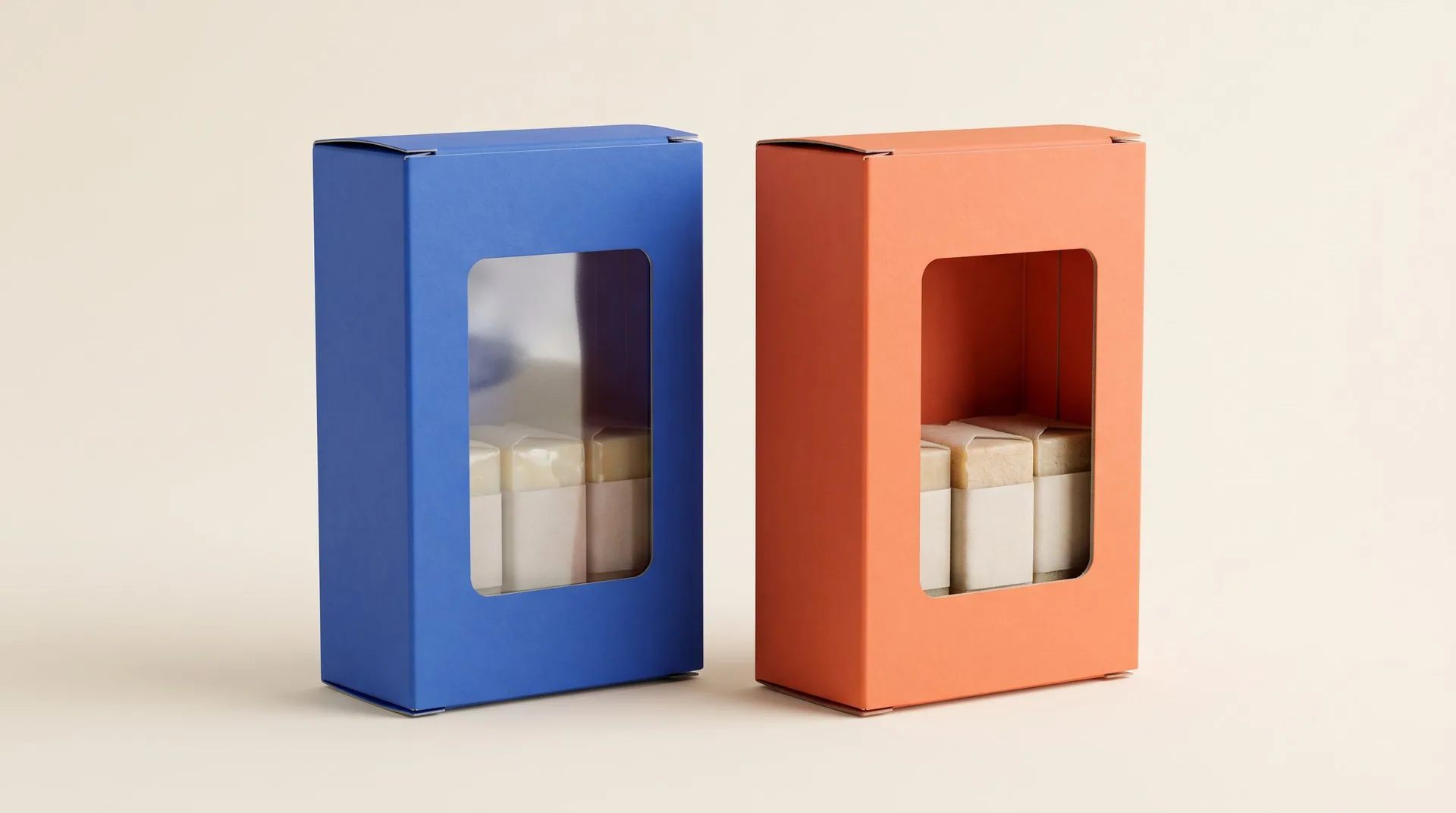
A window patch is a piece of clear film glued over a die-cut hole so shoppers see the product while it stays sealed in. An open window is the same hole with no film: cheaper to make and touchable, but it lets in dust and fingers. Choose film for food, loose or delicate items; choose open for sturdy items that sell by touch.
What is a window patch on a tuck box?
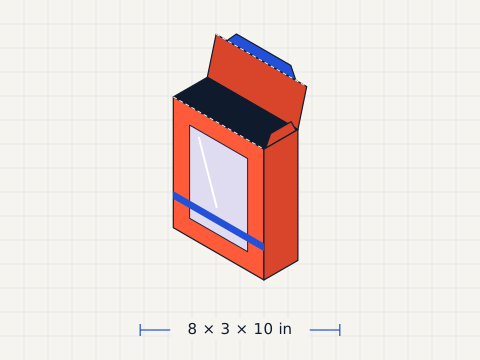
A window starts as a hole die cut through a panel of the carton blank, in the same cut as the rest of the window tuck box. A window patch closes that hole with a clear sheet. A European patent application on window applicators puts it simply: "Window film is often applied over a die cut opening in a folding carton to provide a way to view the contents inside the carton."
The patch goes on the inside of the board. A European patent on packaging blanks describes the usual window as "formed from a separate sheet of plastics material that is glued to the inner face of the carton," adhered "only in the immediate vicinity of the window." So from the outside you see printed board, then a clean frame of film; the glue line sits behind the board.
On our site this is the window patch option: clear film over a die-cut window, or the same window left open.
What is an open window?
An open window is the die-cut hole with nothing over it. The product, or the insert holding it, sits right behind the opening, and shoppers can see and touch it.
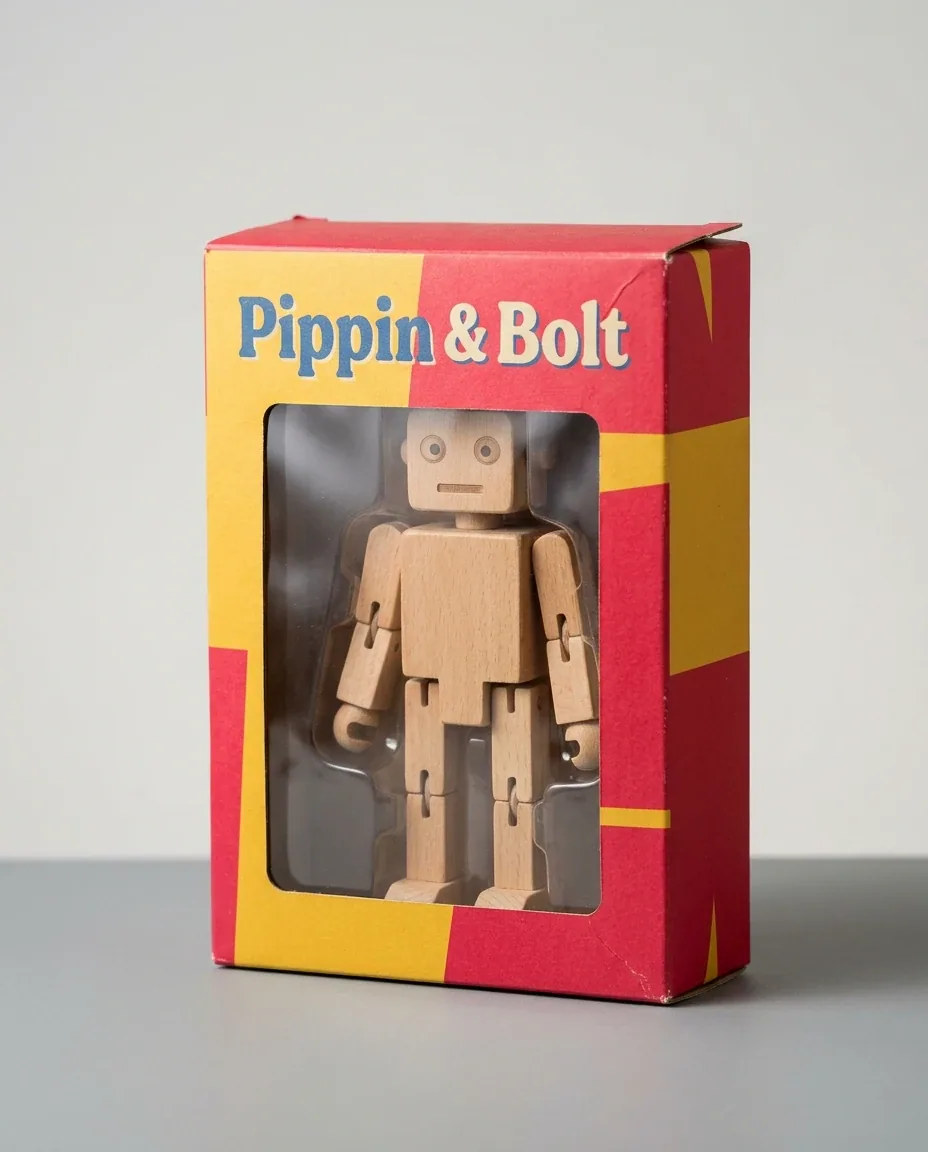
Toy packaging shows why some brands want that. A US patent for an animated toy's display package notes that an opening in the front panel can "permit a user to access the toy," and that "this type of packaging allows a potential purchaser to, in a limited sense, try the product without removing it from the packaging." That is the classic "try me" window.
How do the two compare?
| Window patch (film) | Open window | |
|---|---|---|
| What covers the hole | Clear film glued inside the panel | Nothing |
| Product can be touched | No | Yes |
| Keeps dust and fingers out | Yes | No |
| Keeps loose or small items in | Yes | Only if an insert holds them |
| Extra production step | Yes: film is glued on after die cutting | No |
| Look | Glossy pane, can show reflections | Clean cut, no glare |
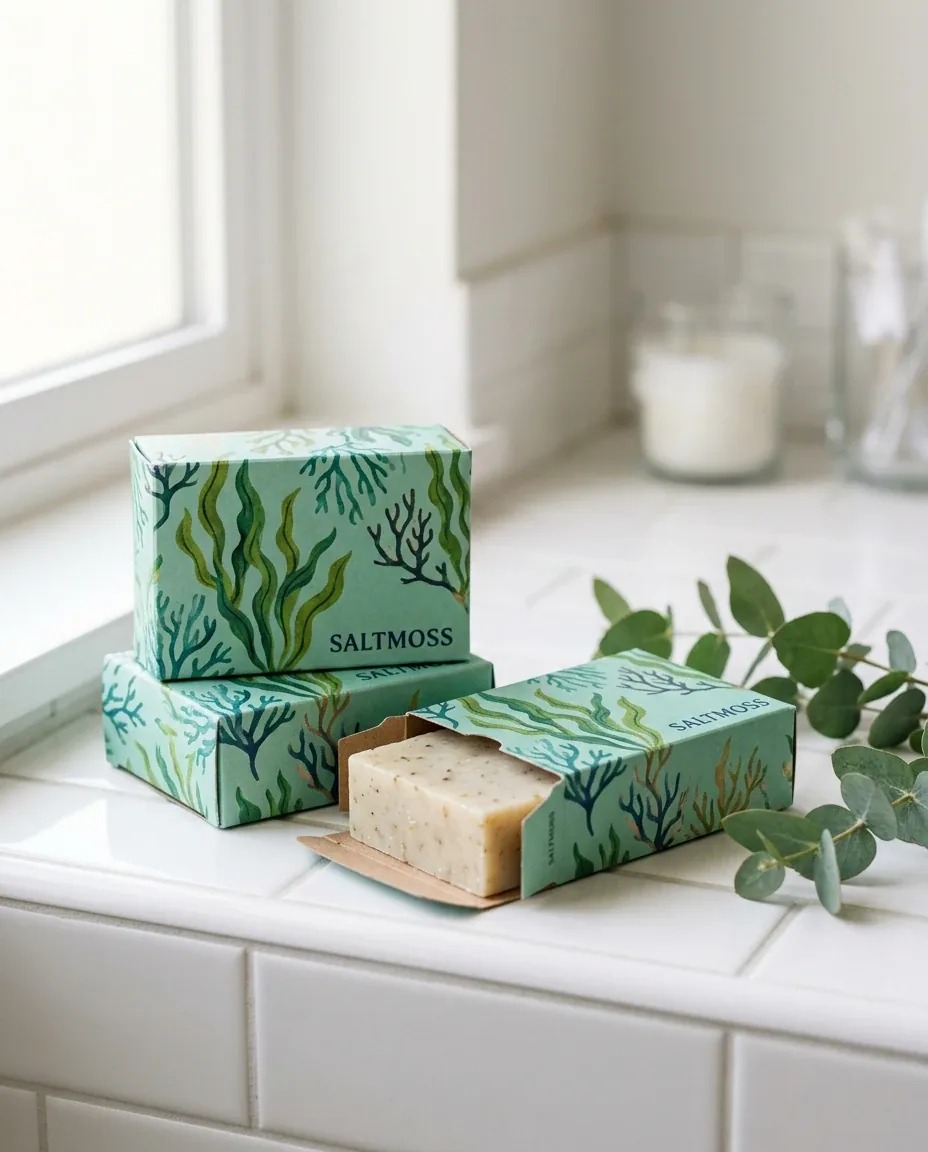
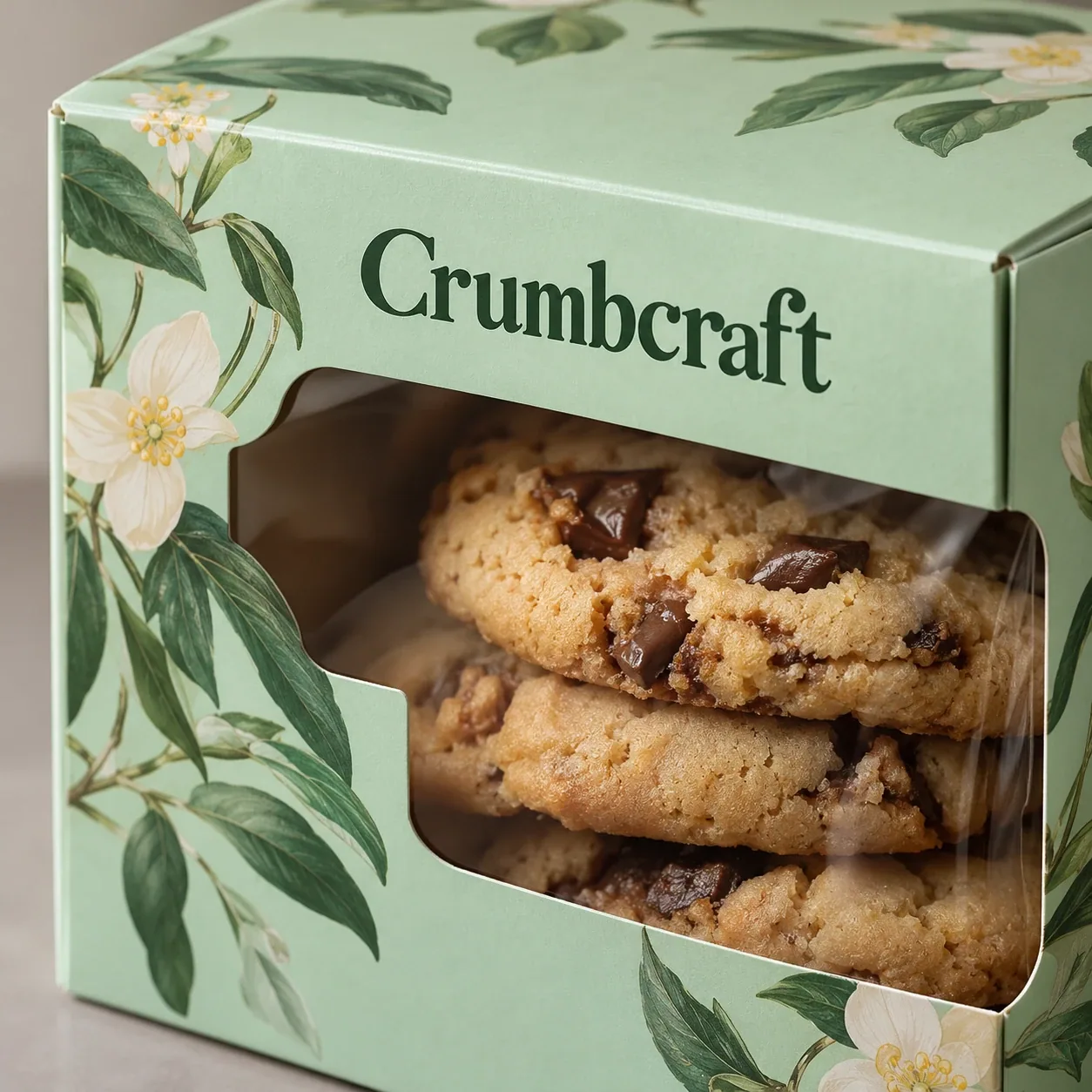
| Good fits | Cookies, candy, soap, lashes, loose parts | Toys, plush, socks, wrapped soap bars |
Why choose a film window patch?
Film lets a shopper see the product while it stays closed in. The packaging blanks patent describes the purpose for food cartons: to let a buyer "view the food item they are about to buy, but to protect the food item from contamination and to extend its shelf life, a clear plastic window is also provided in the carton." The toy patent makes the same point for display boxes: a transparent section over the opening lets the shopper see the product "while preventing a user from reaching into the display package."
Pick a film window when:
- the product is food, such as cookies or candy, and should not be touched;
- small pieces could fall out of an open hole;
- the product marks easily, like lashes, cosmetics or polished parts;
- the box ships loose in a carton, where an open hole can catch on other boxes.
The patch does add a step. The window applicator application describes how "adhesive-bearing individual window patches are applied to moving folding cartons" in register with the cut lines. That means film, glue and machine time, and on a quote it shows up as an option rather than as part of the plain box.
Why choose an open window?
An open window skips the film and the gluing step, and there is no film to reflect store lights. It suits products that are sturdy, wrapped or meant to be felt:
- toys with a button or texture shoppers should try;
- soft goods such as socks;
- wrapped soap bars, where the wrapper keeps the bar clean and the window shows the color and shape.
The trade-off is protection. The toy patent warns that "since the display package includes an opening along its front portion, the toy is susceptible to unwanted contact that may damage the toy" during shipping. Its fix is a cover that is removed at the store. For most brands the simpler answer is an insert that holds the product snug behind the window, so it cannot rattle against the edge of the hole.
Thin film or rigid window: which film is used?
Most window patches are thin, flexible film. The window applicator application contrasts "thinner films of approx .0005" to .003" thick" with rigid windows of "approximately .007" or thicker," and notes that "rigid windows may be made of such polymers as polyester, calendared PVC, or polystyrene." Rigid windows are stiffer and stay flat on large openings; thin film is the usual choice on small and mid-size tuck boxes.
Polyester film (PET) is known for clarity: Wikipedia's article on BoPET says biaxially oriented PET film "has excellent clarity, despite its semicrystalline structure." We do not state which film your order uses until it is confirmed in your quote, and we make no recycling or compostability claims for window film.
How do you design around a window?
A few rules of thumb for either type:
- Keep the window inside one panel. Leave board between the window and every fold, so the panel keeps its strength and the folds stay crisp.
- Treat the window edge like a cut line. Keep text and logos inside the safe area around it, as in our bleed and safe area guide.
- Line the window up with the product. Put the best view, such as the label or the face of the toy, behind the hole. An insert helps hold it there.
- Remember the inside. Through a window, shoppers see the inside of the carton. Plain board shows; SBS C1S has a white inside, and kraft shows brown.
- Print the dieline at full size, cut the window and put the real product behind it before you approve the proof.
Every order comes with a free digital design and dieline with the window drawn where you want it, and a digital proof before anything prints. There is no minimum order quantity: order 1 piece or 10,000. Tell us film or open on the quote form.
FAQ
Is a window patch the same as a window box?
Not quite. A window box is any box with a die-cut window. The window patch is the clear film glued over that window. A window box can have a patch or be left open.
Does a film window keep the product clean?
It keeps dust and fingers off the product behind the window, which is why patent filings describe it as protecting food in cartons from contamination. It is not an airtight seal: the carton still has flaps and folds.
Is an open window cheaper than a film window?
Usually, yes, because there is no film and no window gluing step. The exact difference depends on size and quantity and is shown in your custom quote.
Can a kraft tuck box have a window?
Yes. The window is cut the same way in kraft or white board, with or without film. Through the window, the brown inside of kraft board will show.
Sources
- European Patent Office application EP2371526A1, "Rigid window applicator and method" (Google Patents), read 6 Nov 2026: https://patents.google.com/patent/EP2371526A1/en
- European Patent Office application EP3009262A1, "A method of manufacturing blanks for packaging" (Google Patents), read 6 Nov 2026: https://patents.google.com/patent/EP3009262A1/en
- US patent US7954641B2, "Display packaging for an animated toy" (Google Patents), read 6 Nov 2026: https://patents.google.com/patent/US7954641B2/en
- Wikipedia, "BoPET", read 6 Nov 2026: https://en.wikipedia.org/wiki/BoPET